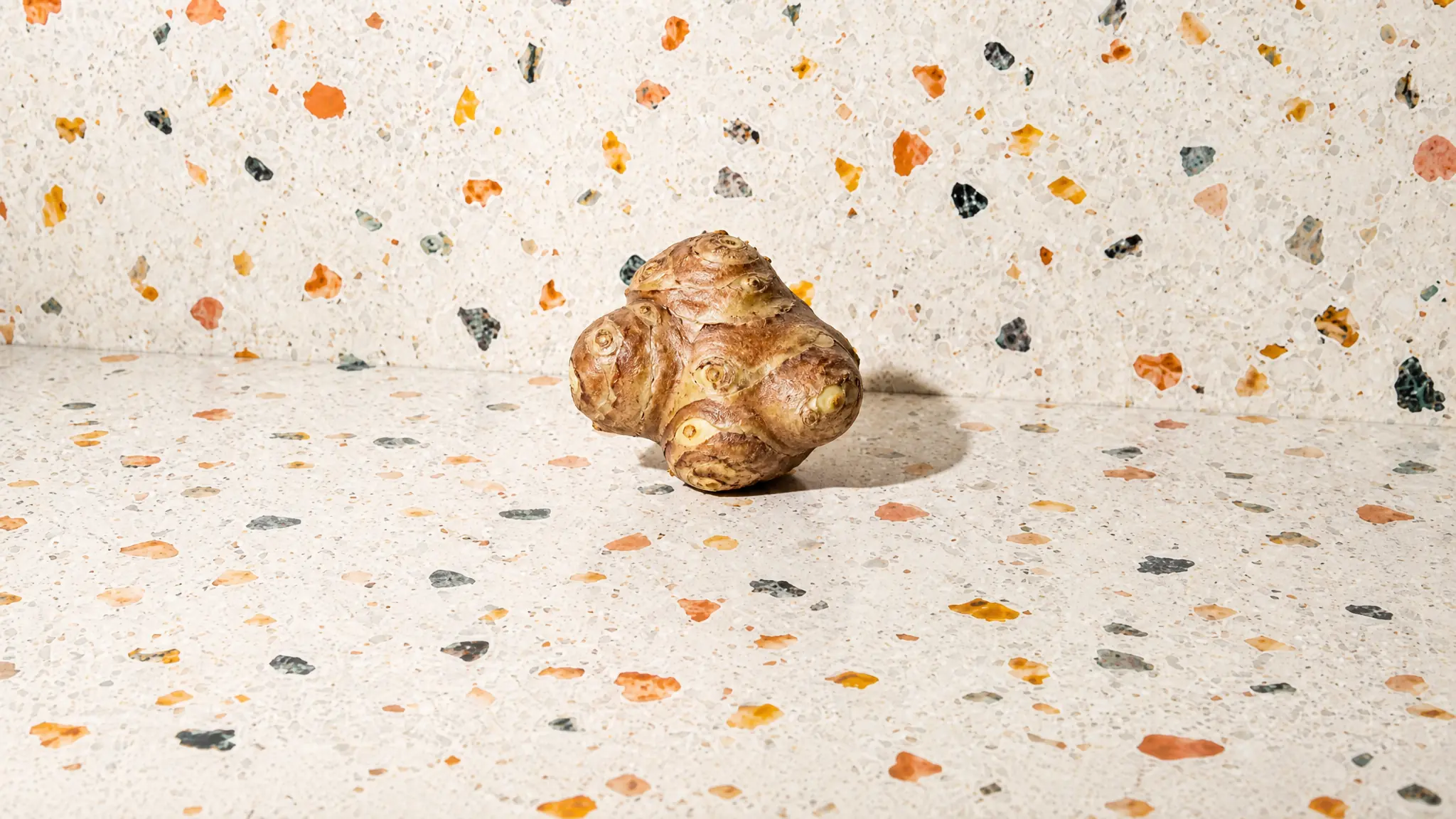
Sunchoke (Jerusalem Artichoke)
Vegetable
Last updated July 5, 2026. The Tummi Food Team maintains this Can I Feed This safety guide guide. Supporting links appear in Sources when available.



Clinically reviewed by Andria Procopio and Arefa Mohamed
Direct answer
Can babies eat Sunchoke (Jerusalem Artichoke)?
Yes, babies can eat sunchokes starting around 6 months, but introduce small amounts gradually to monitor tolerance due to their gas-producing fiber.
- Serve Age6+months
Most babies start solids around 6 months once they show readiness signs. Match the texture and serving size to your baby's skills.
- No Allergens
Sunchoke (Jerusalem Artichoke) is not flagged as one of the major allergens tracked in this database. Still watch your baby closely when serving any new food.
- Choking Risk123452
Lower choking risk when served in the right texture. Always supervise meals and adjust the shape for your baby.
This guide is for everyday food prep questions. Ask your pediatrician about medical concerns, feeding delays, allergy plans, or serious reactions.
How Do You Serve Sunchoke (Jerusalem Artichoke)?
How to serve Sunchoke (Jerusalem Artichoke) to a 9-month-old baby
- 1Cook until very soft. Roast, steam, or boil sunchokes until a fork slides through easily so pieces can be mashed by gums.
- 2Easy-to-hold wedges or mash. After cooking, cut thick wedges your baby can grasp and gum; if whole pieces feel risky, mash to a soft, scoopable consistency.
- 3Start tiny and go slow. Very small servings at first—sunchokes are high in inulin and can cause gas—then increase amounts gradually while watching for discomfort.
- 4Serve warm (not hot), plain or mixed with a familiar food, and always supervise during eating to reduce choking risk.
How to serve Sunchoke (Jerusalem Artichoke) to a 12-month-old baby
- 1Cook until very soft (steam, boil, or roast) and cut into small, bite-sized pieces—about 1/2 inch—so the child can pick them up with a pincer grasp.
- 2Check texture by pressing with a finger; it should mash easily to reduce choking risk. If it’s still firm, cook longer or mash before serving.
- 3Offer one piece at a time while the child sits upright and always supervise; model how to spit out excess food if they overfill their mouth.
- 4Do not add salt, sugar, or honey—serve plain or mixed with a familiar puree.
- 5If you remain worried about choking, continue offering mashed sunchoke until your child handles firmer textures comfortably.
How to serve Sunchoke (Jerusalem Artichoke) to a 24-month-old baby
- 1Offer thinly sliced or grated raw sunchoke as a crunchy finger food; slice paper-thin (about 1–2 mm) so pieces are easy to chew.
- 2Continue to serve bite-sized cooked pieces as finger foods; steam or roast until easily pierced with a fork and cut into small, manageable pieces — aim for soft but not mushy.
- 3Introduce utensils by offering a toddler fork or spoon during meals and demonstrating scooping and spearing to build utensil skills.
- 4Make a mild quick-pickle by thinly peeling and slicing sunchoke, then soaking briefly in a light vinegar solution with a pinch of salt and sugar; serve small portions and rinse if the vinegar is strong.
- 5Start with small portions and introduce sunchoke separately from other new foods; watch for gas or digestive discomfort and pause or reduce servings if needed.
Is Sunchoke (Jerusalem Artichoke) a Common Allergen?
Sunchokes (Jerusalem artichokes) are not among the common top-9 allergens and are unlikely to cause typical food-allergic reactions. They contain inulin — a fermentable fiber that often causes gas, bloating, or loose stools, especially in larger amounts or when raw. True allergic reactions are rare but possible; introduce a small amount first and watch for hives, swelling, vomiting, or difficulty breathing. If there is a strong family history of plant/pollen allergies or any concern, consult your pediatrician before introducing.
Is Sunchoke (Jerusalem Artichoke) a Choking Hazard?
Low Choking Risk
Undercooked or raw sunchokes can pose a choking hazard because their firm, knobby texture may be difficult for young mouths to manage. Keep baby seated and within arm’s reach during meals and watch closely for signs of distress such as persistent coughing, gasping, or inability to cry or breathe. Ensure caregivers are familiar with infant choking first aid and CPR so they can respond quickly if needed.
Have More Questions?
Yes. Sunchokes are generally safe for babies to eat once they are ready for solids, around 6 months, but start with small amounts and watch for digestive reactions due to their high fiber content.
They come from native North American tubers that have been cultivated for centuries; they are now grown worldwide in cooler climates.
Yes. Sunchokes are rich in iron, potassium, and other nutrients beneficial for baby’s growth, making them a healthy addition to a balanced diet.
Yes. The inulin in sunchokes can cause gas because it promotes gut bacteria that break down the fiber, so introduce them gradually to minimize discomfort.
Yes. Raw or undercooked sunchokes can pose a choking hazard; ensure they are cooked until soft and sliced thinly to prevent choking.
Save Sunchoke (Jerusalem Artichoke) to your food log
Track foods, reactions, and prep notes in Tummi when you want to keep your baby's feeding history in one place.
Sources
- Nutritional value, bioactivity, and application potential of Jerusalem artichoke (Helianthus tuberosus L.) as a neotype feed resource doi.org
- Phenolic Acids in Jerusalem Artichoke (Helianthus tuberosus L.): Plant Organ Dependent Antioxidant Activity and Optimized Extraction from Leaves doi.org
- The prospects of Jerusalem artichoke in functional food ingredients and bioenergy production doi.org
- Investigating the effect of different inulin-rich substrate preparations from Jerusalem artichoke (Helianthus tuberosus L.) tubers on efficient inulooligosaccharides production doi.org
- Functional and therapeutic potential of inulin: A comprehensive review doi.org
- The use of inulin-type fructans improves stool consistency in constipated children. A randomised clinical trial: pilot study doi.org
- Allergy to jerusalem artichoke due to immediate IgE reaction to Bet v1-like allergen doi.org
What Other Vegetable Can Babies Eat?
See all →
Source-Linked Guidance
See the evidence behind the guide.
Food guides show direct links to public-health guidance and research when supporting references are available. Source inclusion does not imply endorsement.
 Centers for Disease Control and Prevention
Developmental milestones, nutrition guidelines, and allergen introduction timelines.
 American Academy of Pediatrics
Evidence-based feeding recommendations from the leading pediatric authority.
 National Institutes of Health
Peer-reviewed research on infant nutrition, allergies, and food safety.