
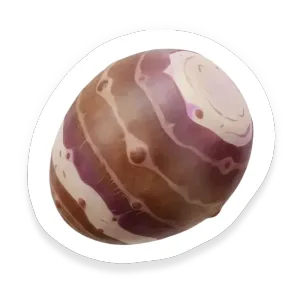
Taro
Vegetable
Last updated July 5, 2026. The Tummi Food Team maintains this Can I Feed This safety guide guide. Supporting links appear in Sources when available.



Clinically reviewed by Andria Procopio and Arefa Mohamed
Direct answer
Can babies eat Taro?
Yes, babies can eat cooked taro from around 6 months, ensuring it's thoroughly heat-cooked to eliminate toxins.
- Serve Age6+months
Most babies start solids around 6 months once they show readiness signs. Match the texture and serving size to your baby's skills.
- No Allergens
Taro is not flagged as one of the major allergens tracked in this database. Still watch your baby closely when serving any new food.
- Choking Risk123452
Lower choking risk when served in the right texture. Always supervise meals and adjust the shape for your baby.
This guide is for everyday food prep questions. Ask your pediatrician about medical concerns, feeding delays, allergy plans, or serious reactions.
How Do You Serve Taro?
How to serve Taro to babies 6 months and older
- 1Peel and cook taro until very soft—boil or steam until it mashes easily with a fork so there are no hard or undercooked pieces.
- 2For self-feeding, offer large wedges about the width of two adult fingers pressed together so your child can grasp and gum the piece; stay within arm’s reach while they eat.
- 3Fresh or fermented poi are good alternatives—serve plain and smooth, without added salt or sugar, and check commercial poi labels for additives.
- 4Cook all parts thoroughly to break down calcium oxalate crystals that can irritate the mouth; do not serve raw or undercooked taro, and avoid deep-fried taro products until the child is older.
How to serve Taro to babies 9 months and older
- 1Cook taro until very soft — boiling, steaming, or baking; test with a fork to ensure it mashes easily.
- 2Cut into soft, bite-sized pieces for soups, stews, salads, or finger food; offer larger wedges if the child is practicing biting and chewing.
- 3Serve poi or mashed taro when chewing is limited; keep the texture smooth to reduce choking risk.
- 4If using taro leaves, finely chop and cook thoroughly to remove bitterness and any irritating compounds.
- 5Add mild seasonings (e.g., a pinch of cinnamon or coconut) sparingly to vary flavor. Always supervise closely for choking or allergic reactions.
How to serve Taro to babies 12 months and older
- 1Cook taro until very soft (boil, steam, or pressure-cook) and test with a fork so it mashes easily; cool and peel before serving.
- 2Serve in easy-to-chew forms—soft wedges, bite-sized cubes (~1 cm), or mashed portions so pieces break apart with chewing.
- 3Encourage self-feeding by offering a toddler-safe fork with blunt tines and demonstrating scooping or spearing, while still allowing finger feeding as needed.
- 4Prioritize safety: always supervise meals, keep pieces soft and appropriately sized to reduce choking risk, and store leftovers promptly in the fridge (use within 48 hours) and reheat thoroughly before serving.
Is Taro a Common Allergen?
Most people tolerate taro and it is not a common food allergen (it does not contain milk, egg, peanut, tree‑nut, soy, gluten, fish or shellfish). However, raw or undercooked taro contains needle‑like calcium oxalate crystals that can cause intense mouth, lip or throat irritation and sometimes skin irritation on contact — always cook taro thoroughly before serving. Be mindful of cross‑contact if taro is prepared with other allergenic ingredients, and use gloves if handling causes skin sensitivity. If a child develops significant swelling, hives, or breathing difficulty after tasting or handling taro, seek medical care promptly.
Is Taro a Choking Hazard?
Low Choking Risk
Taro prepared appropriately for a baby’s developmental stage typically presents a low choking risk, but any food can cause choking. Stay within arm’s reach and closely supervise meals, and be ready to perform infant choking first aid if needed. If your baby struggles with the texture or handling, pause feeding and consult your pediatrician.
Have More Questions?
Yes. When thoroughly cooked, taro can be safely introduced to babies around 6 months, provided all parts are properly prepared to avoid toxicity.
Yes. Taro is healthy for babies when well-cooked, offering essential nutrients like fiber, vitamins, and minerals that support growth and development.
No. Taro allergies are rare, but it's advisable to introduce small amounts gradually to monitor for any reactions, especially in children with pollen sensitivities.
No. Cooked, soft taro poses a low choking risk when served in appropriate textures and sizes for baby's developmental stage.
Yes. Babies can start eating poi, a mashed taro dish, around 6 months, ensuring it is served in safe, manageable textures.
Save Taro to your food log
Track foods, reactions, and prep notes in Tummi when you want to keep your baby's feeding history in one place.
Sources
- Anticancer and Immunomodulatory Benefits of Taro (Colocasia esculenta) Corms doi.org
- Two cases of poisoning by raw taro leaf and how a poison control centre, food safety inspectors, and a specialty supermarket chain found a solution doi.org
- Composition and availability of soluble and insoluble oxalates in raw and cooked taro (Colocasia esculenta var. Schott) leaves doi.org
- Case studies in toxicology: Always cook your boba doi.org
- Effect of genotypes and growth locations on composition and functional properties of amadumbe flours doi.org
- Pollen-Food Allergy Syndrome in Korean Pollinosis Patients: A Nationwide Survey doi.org
- Native Hawaiian Complementary Feeding Practices as Told by Grandparents: A Transgenerational Experience doi.org
- Toxins in Fermented Foods: Prevalence and Preventions-A Mini Review doi.org
What Other Vegetable Can Babies Eat?
See all →



Source-Linked Guidance
See the evidence behind the guide.
Food guides show direct links to public-health guidance and research when supporting references are available. Source inclusion does not imply endorsement.
 Centers for Disease Control and Prevention
Developmental milestones, nutrition guidelines, and allergen introduction timelines.
 American Academy of Pediatrics
Evidence-based feeding recommendations from the leading pediatric authority.
 National Institutes of Health
Peer-reviewed research on infant nutrition, allergies, and food safety.