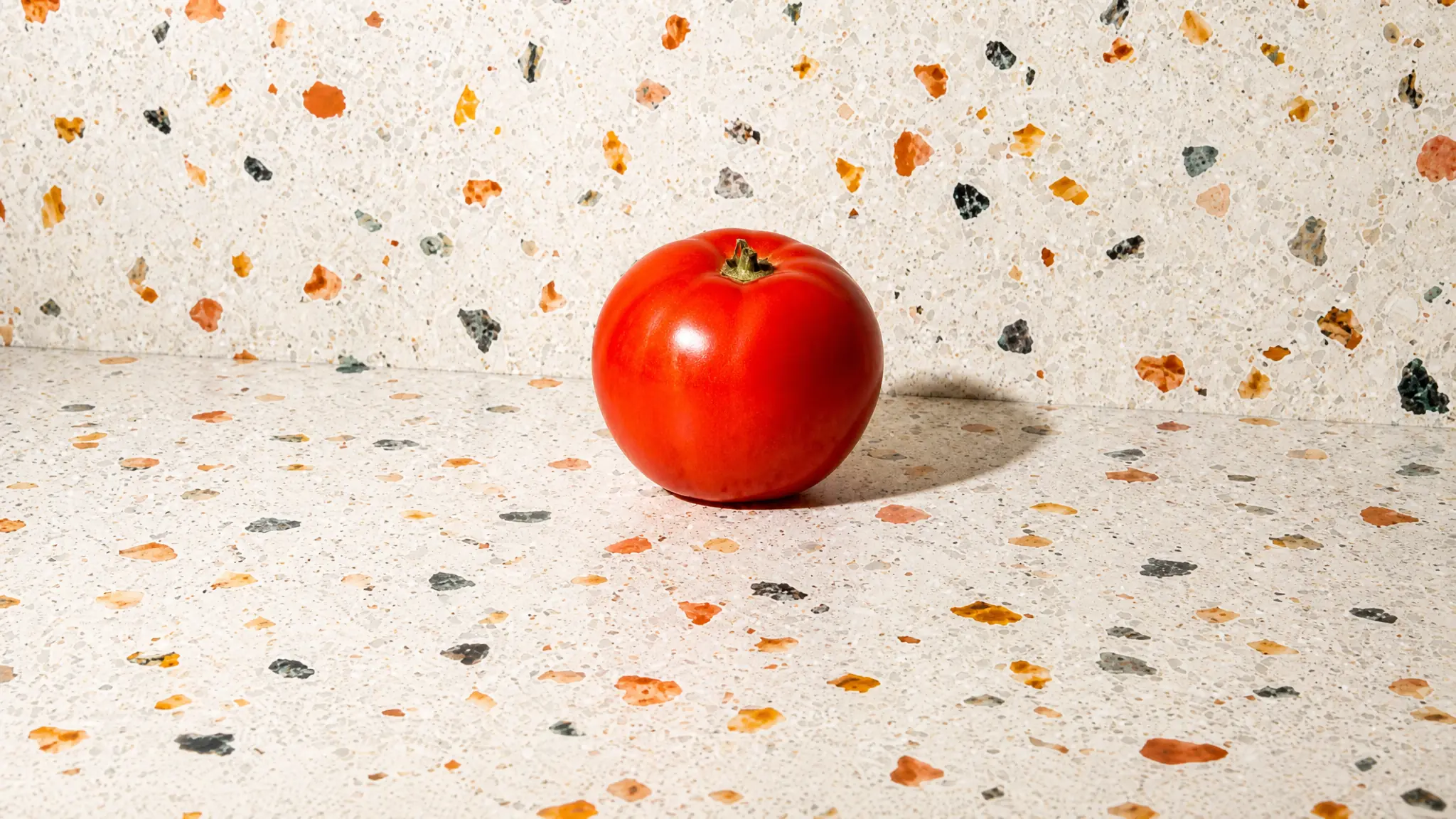
Tomato
Vegetable
Last updated July 5, 2026. The Tummi Food Team maintains this Can I Feed This safety guide guide. Supporting links appear in Sources when available.



Clinically reviewed by Andria Procopio and Arefa Mohamed
Direct answer
Can babies eat Tomato?
Yes, tomatoes can be introduced at around 6 months, ensuring they are cooked and cut into safe, small pieces to prevent choking.
- Serve Age6+months
Most babies start solids around 6 months once they show readiness signs. Match the texture and serving size to your baby's skills.
- No Allergens
Tomato is not flagged as one of the major allergens tracked in this database. Still watch your baby closely when serving any new food.
- Choking Risk123454
Higher choking risk. Watch the prep steps closely, especially because this food can be small and round and slippery.
This guide is for everyday food prep questions. Ask your pediatrician about medical concerns, feeding delays, allergy plans, or serious reactions.
How Do You Serve Tomato?
How to serve Tomato to babies 6 months and older
- 1Wash and core a large, ripe tomato, then quarter it and offer a wedge that’s easy for baby to grasp.
- 2Remove the skin if it seems tough or slippery. Peeling reduces slipping.
- 3For self-feeding, offer a whole very soft tomato or a large, soft wedge but supervise closely. The slippery skin, seeds, and juicy pulp can trigger gagging.
- 4If tomato juices irritate the skin, serve cooked tomato or a simple tomato sauce instead. Cook until soft to reduce acidity and make it gentler on skin.
How to serve Tomato to babies 9 months and older
- 1Quarter cherry tomatoes or chop larger tomatoes into small, bite-sized pieces so they’re easy for little hands to grasp and chew.
- 2Remove any loose skins and tough cores; check each piece before serving.
- 3For utensil practice, pre-load a small fork with a single tomato piece and guide your child’s hand so they learn scooping and bringing food to the mouth.
- 4Offer tomatoes in simple sauces or thin wedges (remove seeds if needed) to introduce different textures, and always supervise to model safe chewing and swallowing.
How to serve Tomato: Varies
- 1Start with halved grape or cherry tomatoes rather than whole ones so each piece is easy to bite.
- 2Choose large, ripe grape-style tomatoes and demonstrate a slow, gentle bite so the child sees how to split the tomato safely.
- 3Keep the child seated and closely supervised during the whole feeding while you coach them to chew thoroughly before swallowing.
- 4If the child struggles, return to smaller, guided pieces (quarters or diced) and practice chewing and taking small bites.
- 5Progress gradually and only offer larger pieces again once the child consistently takes small bites, moves food to the side of the mouth, and chews well.
Is Tomato a Common Allergen?
Tomatoes are not a common top allergen but can cause oral allergy syndrome in people (especially children) with pollen allergies — producing itchy/tingly mouth, lips, or throat after raw tomato. Cooking often reduces that reaction, but more severe symptoms (hives, swelling, wheeze) can occur and need urgent care. Tomatoes can cross‑react with birch/grass pollens and other nightshades (e.g., peppers), and processed tomato products may be contaminated with other allergens. If your child has known pollen allergies or develops swelling, breathing trouble, or widespread hives after tomatoes, avoid them and see an allergist.
Is Tomato a Choking Hazard?
Elevated Choking Risk
Tomatoes—especially small, round varieties like cherry or grape—are a choking hazard because their size, slippery skin and juicy pulp can easily block a young child’s airway and provoke gagging. Stay within arm’s reach and watch closely during meals for signs of choking or distressed breathing. Be prepared with basic infant rescue knowledge so you can respond quickly if needed.
Have More Questions?
Yes, parents can store tomatoes in the refrigerator for up to 1 week or freeze small amounts for longer storage. It's best to use airtight containers to maintain freshness.
It depends on the consistency. Frozen tomato purees can be stored for up to 3 months, but fresh or cooked tomatoes should be used within a few days if refrigerated.
It depends on the brand and whether the tomatoes are organic or conventional. Both can be healthy options, but organic may have fewer pesticide residues.
It depends on the combination. Tomatoes pair well with mild flavors like avocado, cheese, or basil, but avoid mixing them with highly spicy or salty foods.
Portion sizes should be small, usually a few teaspoons for a new eater, gradually increasing as they get used to the flavor and texture.
Save Tomato to your food log
Track foods, reactions, and prep notes in Tummi when you want to keep your baby's feeding history in one place.
Sources
- Tomato contact dermatitis doi.org
- Lycopene and vitamin C concentrations increase in plasma and lymphocytes after tomato intake. Effects on cellular antioxidant protection doi.org
- Carotenoids-Antioxidant Properties doi.org
- Dietary tomato paste protects against ultraviolet light-induced erythema in humans doi.org
- Oral allergy syndrome doi.org
What Other Vegetable Can Babies Eat?
See all →

Source-Linked Guidance
See the evidence behind the guide.
Food guides show direct links to public-health guidance and research when supporting references are available. Source inclusion does not imply endorsement.
 Centers for Disease Control and Prevention
Developmental milestones, nutrition guidelines, and allergen introduction timelines.
 American Academy of Pediatrics
Evidence-based feeding recommendations from the leading pediatric authority.
 National Institutes of Health
Peer-reviewed research on infant nutrition, allergies, and food safety.