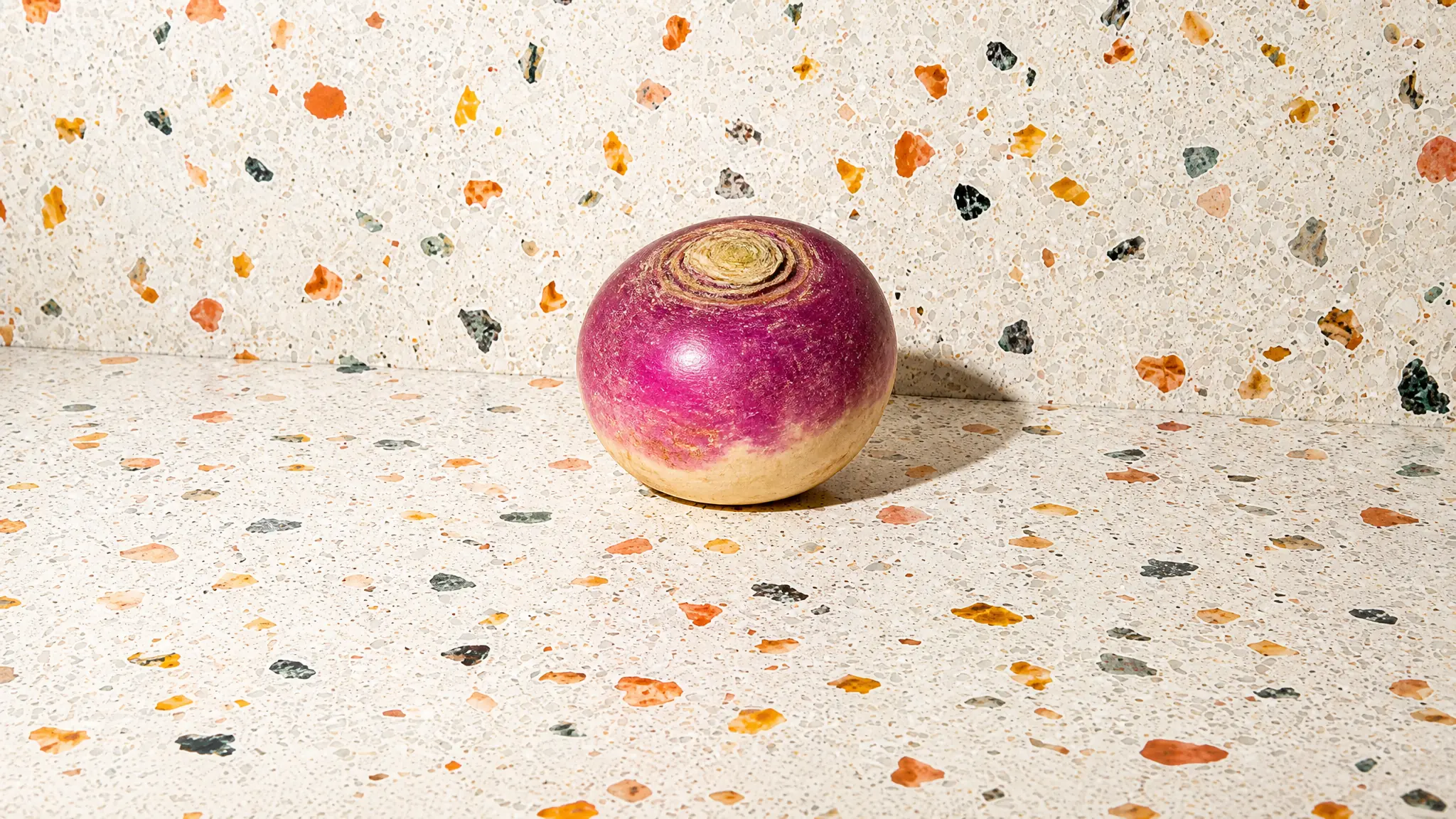
Turnip
Vegetable
Last updated July 5, 2026. The Tummi Food Team maintains this Can I Feed This safety guide guide. Supporting links appear in Sources when available.


Clinically reviewed by Andria Procopio and Arefa Mohamed
Direct answer
Can babies eat Turnip?
Yes, babies can eat cooked and pureed turnips from around 6 months of age when they are ready to start solids.
- Serve Age6+months
Most babies start solids around 6 months once they show readiness signs. Match the texture and serving size to your baby's skills.
- No Allergens
Turnip is not flagged as one of the major allergens tracked in this database. Still watch your baby closely when serving any new food.
- Choking Risk123452
Lower choking risk when served in the right texture. Always supervise meals and adjust the shape for your baby.
This guide is for everyday food prep questions. Ask your pediatrician about medical concerns, feeding delays, allergy plans, or serious reactions.
How Do You Serve Turnip?
How to serve Turnip to babies 6 months and older
- 1Peel and cut turnip into chunks, then steam or boil until very soft and fork-tender (about 10–15 minutes depending on chunk size).
- 2Offer large, soft wedges your baby can grasp or mash to a thick, lumpy texture so little hands can scoop.
- 3Use warm turnip mash as a binder for iron-rich grains, legumes, or seeds—mix until evenly combined.
- 4Finely chop cooked turnip greens and fold them in for added nutrients. Well-softened greens should be mixed thinly to avoid large pieces.
How to serve Turnip to babies 9 months and older
- 1Cook the turnip until very soft — boil, steam, or roast until a fork slides through — then cut into bite-sized pieces roughly the size of a large adult knuckle for easy handling.
- 2For bite-practice, offer larger wedges (skin removed) that are soft throughout so the child can gnaw; ensure wedges are easy to mash with the gums.
- 3Vary piece sizes: offer smaller, well-softened pieces for independent picking and larger wedges for practicing chewing, and remove any hard cores or fibrous strands.
- 4Serve plain or mixed with mashed potato, unsalted butter, or mild purées to add familiar texture; avoid adding salt or sweeteners.
- 5Always supervise every meal, seat the child upright, and test temperature before serving to reduce choking and burn risks.
How to serve Turnip to babies 12 months and older
- 1Cook until very tender—steam, boil, or roast—then cut into small, bite-sized pieces that a child can pick up and gum. Pieces should squish easily.
- 2Serve plain or mix into fritters, patties, meatballs, or pancakes to add flavor and nutrients.
- 3Begin with soft, small pieces and avoid offering large, firm wedges until the child reliably bites and tears, because big hard chunks can be a choking risk.
- 4Once chewing is steady, introduce raw turnip finely grated or sliced paper-thin to make it easy to chew and reduce sharp edges.
Is Turnip a Common Allergen?
Turnips are not a common food allergen for most children, but rare allergic reactions (including oral allergy syndrome and contact/oral reactions) have been reported, particularly in sensitized individuals. Cooking often reduces OAS symptoms. If your child has known pollen, Brassica (mustard/rapeseed) or latex sensitivities, or develops mouth itching, hives, swelling or breathing difficulty after eating turnip, avoid giving it and seek medical advice.
Is Turnip a Choking Hazard?
Low Choking Risk
Raw or undercooked turnips are firm and can be a choking hazard for infants. Stay within arm’s reach and watch your baby closely during meals so you can respond quickly to gagging or choking. Introduce turnip cautiously and only offer textures your child can manage, stopping immediately if they show difficulty swallowing.
Have More Questions?
Yes. Turnips can be stored in a refrigerator in a perforated bag for up to a week, and it’s best to store turnip greens separately to keep them fresh longer.
Yes. You can freeze cooked, pureed turnips in an airtight container or ice cubes for up to 3 months, making it convenient for quick meal prep.
It depends. Choosing organic turnips reduces pesticide exposure, but conventional turnips are fine as long as they are properly washed and peeled before preparing for your baby.
Yes. Combining turnip with other vegetables like carrots or sweet potatoes can introduce your baby to a variety of flavors and textures, promoting acceptance of different foods.
It depends. Typical portion sizes for babies aged 6-9 months are about 1-2 tablespoons of pureed turnip per feeding, gradually increasing as the baby grows and shows interest.
Save Turnip to your food log
Track foods, reactions, and prep notes in Tummi when you want to keep your baby's feeding history in one place.
Sources
- The Relationship between Glucosinolates and the Sensory Characteristics of Steamed‑Pureed Turnip (Foods, 2020) doi.org
- The effects of taste sensitivity and repeated taste exposure on children's intake and liking of turnip (Appetite, 2021) doi.org
- Anthocyanin biosynthetic genes in Brassica rapa (BMC Genomics, 2014) doi.org
- Phytochemical and Health-Beneficial Progress of Turnip (J Food Sci, 2019) doi.org
- A Critical Review on Phytochemical Profile and Biological Effects of Turnip (Front Nutr, 2021) doi.org
- The Metabolism of Glucosinolates by Gut Microbiota (Nutrients, 2021) doi.org
- Changes in Gut Microbial Ecology and Immunological Responses of Mice Fed the Insoluble Fraction of Brassica rapa L. (Microbes Environ., 2017) doi.org
- Turnip rape and oilseed rape are new potential food allergens in children with atopic dermatitis (Allergy, 2006) doi.org
- Turnip and zucchini: new foods in the latex-fruit syndrome (Allergy, 2007) doi.org
What Other Vegetable Can Babies Eat?
See all →
Source-Linked Guidance
See the evidence behind the guide.
Food guides show direct links to public-health guidance and research when supporting references are available. Source inclusion does not imply endorsement.
 Centers for Disease Control and Prevention
Developmental milestones, nutrition guidelines, and allergen introduction timelines.
 American Academy of Pediatrics
Evidence-based feeding recommendations from the leading pediatric authority.
 National Institutes of Health
Peer-reviewed research on infant nutrition, allergies, and food safety.