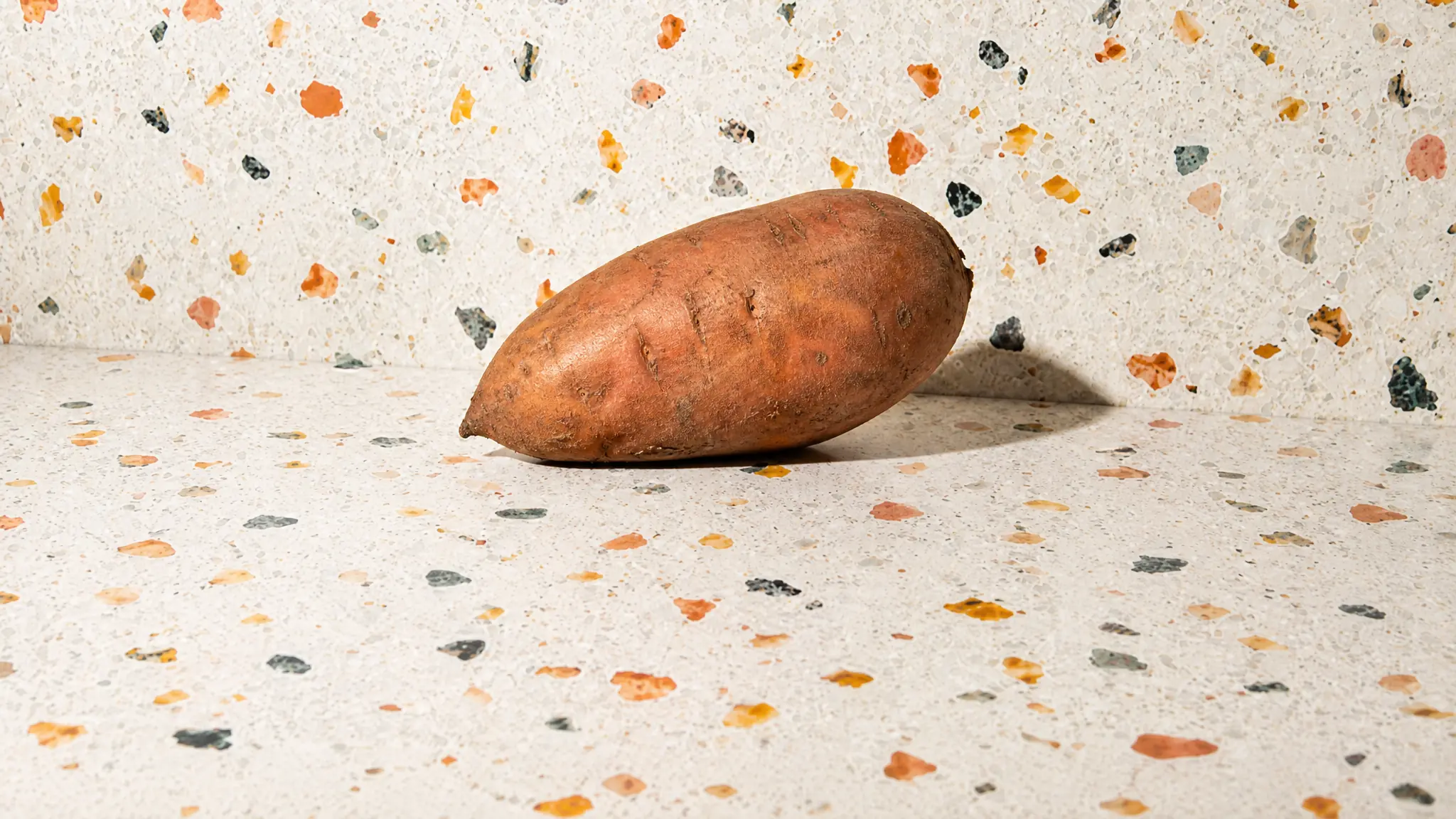
Yam
Vegetable
Last updated July 5, 2026. The Tummi Food Team maintains this Can I Feed This safety guide guide. Supporting links appear in Sources when available.


Clinically reviewed by Andria Procopio and Arefa Mohamed
Direct answer
Can babies eat Yam?
Yes, yams can be introduced to babies around 6 months when they are soft, fully cooked, and mashed or pureed.
- Serve Age6+months
Most babies start solids around 6 months once they show readiness signs. Match the texture and serving size to your baby's skills.
- No Allergens
Yam is not flagged as one of the major allergens tracked in this database. Still watch your baby closely when serving any new food.
- Choking Risk123452
Lower choking risk when served in the right texture. Always supervise meals and adjust the shape for your baby.
This guide is for everyday food prep questions. Ask your pediatrician about medical concerns, feeding delays, allergy plans, or serious reactions.
How Do You Serve Yam?
How to serve Yam to a 9-month-old baby
- 1Cook the yam until very soft—it should be easily pierced with a fork; let it cool to a warm or room temperature before serving.
- 2Offer textures to match feeding style: soft spears for finger-feeding, lightly mashed pieces for guided self-feeding, or a smooth puree for spoon-feeding.
- 3Mix in a small amount of healthy fat (unsalted butter, olive oil, or full-fat yogurt) to boost calories and nutrient absorption; avoid adding salt or honey.
- 4Serve small, soft pieces and supervise while eating; supervise closely and place or preload a spoon nearby to encourage early utensil exploration.
How to serve Yam to a 12-month-old baby
- 1Cook yam until very soft and cut into small, bite-sized cubes that match a pincer grasp; keep a few thicker, soft spears for practicing biting and chewing.
- 2For thin-slice practice, wash and cook the yam thoroughly, then slice thinly with the skin left on so the child can hold and explore texture.
- 3Offer smooth mashed yam as a comforting alternative when chewing feels uncertain, then slowly introduce lumpier pieces as skills improve.
- 4Always supervise eating, ensure pieces are cool and soft, and remove any hard or stringy bits before serving.
How to serve Yam to a 24-month-old baby
- 1Cook yams until very soft (steam, boil, or bake) so they mash easily with a fork; peel if the skin is tough.
- 2Offer a variety of textures—soft spears, small slices, and mashed—so your child can practice chewing and self-feeding.
- 3Cut into bite-sized, manageable pieces (about the size of your thumbnail) and, for utensil practice, pre-load a fork and demonstrate piercing and lifting.
- 4Sit with your child and supervise every bite; avoid pressure—encourage trying but don’t force, and remove any hard or stringy bits to reduce choking risk.
- 5Serve yams regularly at family meals and pair with other finger-friendly foods to model eating and build confidence.
Is Yam a Common Allergen?
Yams are not one of the common major allergens (not typically a source of milk, egg, peanut, tree nut, soy, wheat/gluten, shellfish, fish, or sesame). However, individual allergies to yams or cross-reactivity with other tubers can occur, so introduce in small amounts and monitor for any reactions. Be aware that prepared yam dishes may contain or be cooked with common allergens (butter, milk, nuts, soy, or breading), so always check ingredient lists and preparation methods. If there is a personal or family history of severe food allergy, consult your pediatrician before introducing yam.
Is Yam a Choking Hazard?
Low Choking Risk
Yams aren’t usually a choking hazard when fully cooked until soft, but firmer pieces can be risky for young babies. Always stay within arm’s reach and supervise closely—gagging is a common protective reflex as babies learn new textures, so remain calm and be ready to assist. If you have concerns about choking or your baby’s chewing skills, consult your pediatrician for personalized advice.
Have More Questions?
Yes. Fully cooked yams are safe for babies from about 6 months old and can be served mashed, pureed, or in small, manageable pieces.
Yes. You can freeze cooked yam puree in ice cube trays for convenient portioning; just ensure it is cooled and stored in airtight containers.
Yes. Regardless of whether yams are organic or conventionally grown, they are safe for babies, but always wash and cook thoroughly to remove dirt and bacteria.
Yes. Yams can be combined with other baby foods, such as fruits or vegetables, to diversify flavors and nutrients, as long as textures are age-appropriate.
A typical portion size for a baby starting solids is about 1-2 tablespoons, gradually increasing as they develop and tolerate more.
Save Yam to your food log
Track foods, reactions, and prep notes in Tummi when you want to keep your baby's feeding history in one place.
Sources
- What is the difference between sweet potatoes and yams? — Library of Congress loc.gov
- The Dioscorea Genus (Yam) — Foods (Obidiegwu et al., 2020) doi.org
- Evaluation of Nutritive Value of Yam Based Weaning Food Fortified With Soy and Vegetables Minerals Sources — ResearchGate (Soronikpoho et al.) researchgate.net
- Effect of water yam (Dioscorea alata) flour fortified with distiller's spent grain — Food Science & Nutrition (Awoyale et al., 2015) doi.org
- Effect of water yam — PMC ncbi.nlm.nih.gov
- Occurrence of environmental pollutants in foodstuffs: A review — Food Chem Toxicol (González et al., 2019) doi.org
- Metals in Baby Food — HealthyChildren.org healthychildren.org
- Bitter Yam — Natural Medicines naturalmedicines.therapeuticresearch.com
- Identification of a thermal stable allergen in yam — Asia Pacific Allergy (Xu & Yin, 2018) doi.org
- Identification of Dioscorea batatas allergen — Journal of Korean Medical Science (Hur et al., 2008) doi.org
- Oral Allergy Syndrome — American Academy of Allergy, Asthma & Immunology (AAAI) aaaai.org
- Oral allergy syndrome — CMAJ (Sussman et al., 2010) cmaj.ca
What Other Vegetable Can Babies Eat?
See all →
Source-Linked Guidance
See the evidence behind the guide.
Food guides show direct links to public-health guidance and research when supporting references are available. Source inclusion does not imply endorsement.
 Centers for Disease Control and Prevention
Developmental milestones, nutrition guidelines, and allergen introduction timelines.
 American Academy of Pediatrics
Evidence-based feeding recommendations from the leading pediatric authority.
 National Institutes of Health
Peer-reviewed research on infant nutrition, allergies, and food safety.