Rice
Grain
Last updated July 5, 2026. The Tummi Food Team maintains this Can I Feed This safety guide guide. Supporting links appear in Sources when available.



Clinically reviewed by Andria Procopio and Arefa Mohamed
Direct answer
Can babies eat Rice?
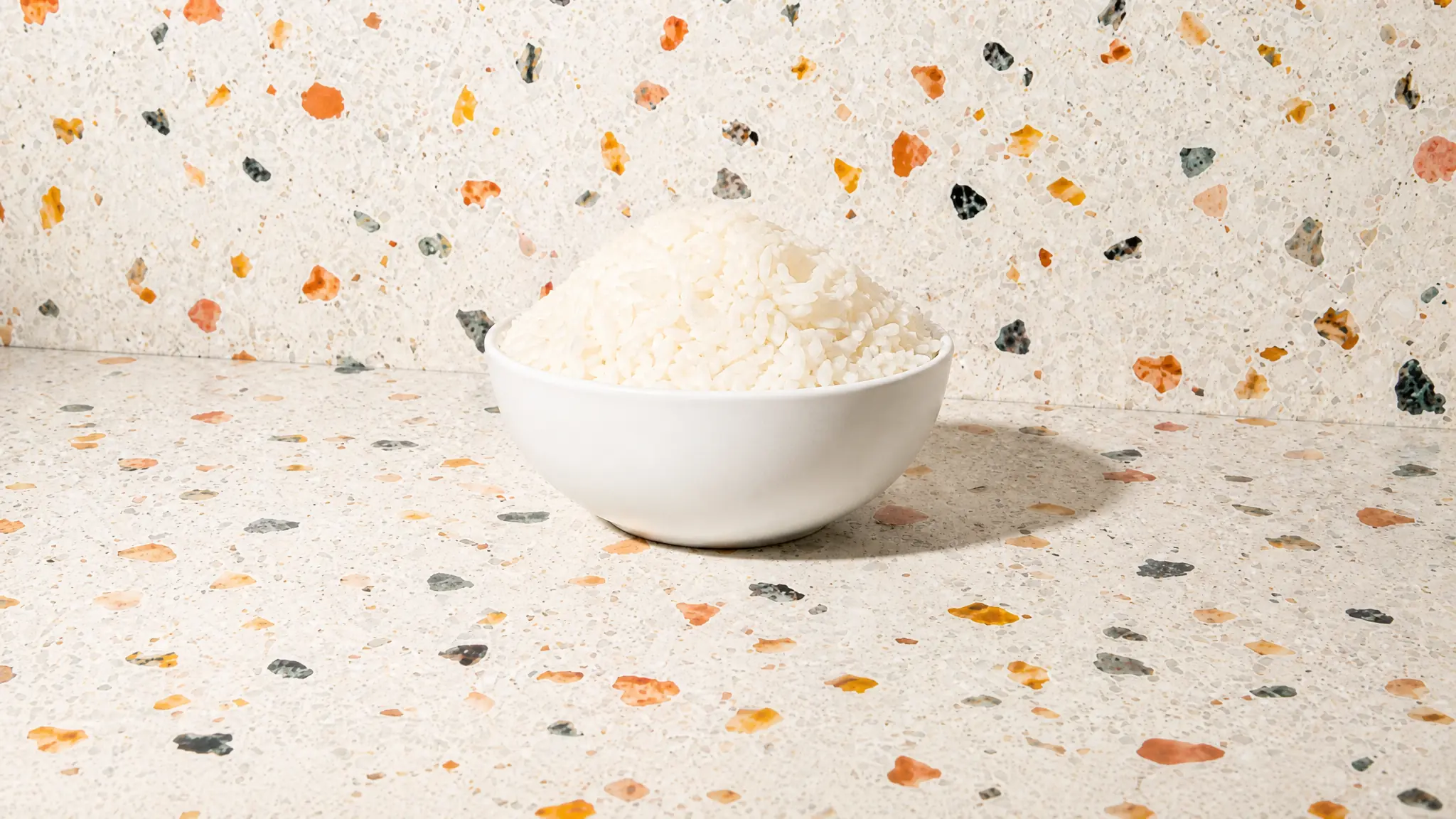
Yes, rice can be introduced around 6 months, cooked thoroughly and mashed or pureed for babies starting solids.
- Serve Age6+months
Most babies start solids around 6 months once they show readiness signs. Match the texture and serving size to your baby's skills.
- No Allergens
Rice is not flagged as one of the major allergens tracked in this database. Still watch your baby closely when serving any new food.
- Choking Risk123451
Lower choking risk when served in the right texture. Always supervise meals and adjust the shape for your baby.
This guide is for everyday food prep questions. Ask your pediatrician about medical concerns, feeding delays, allergy plans, or serious reactions.
How Do You Serve Rice?
How to serve Rice to babies 6 months and older
- 1Mix moist, cooked rice into sauces, stews, or a thick porridge (congee) so the texture is soft and scoopable for a spoon or baby’s hand.
- 2Offer a pre-loaded spoon to start guided bites or place small amounts on a shallow spoon so the baby can practice scooping—always supervise during self-feeding.
- 3Serve large, soft rice balls or short, chopped rice noodles for finger-feeding; avoid chewy, sticky steamed rice cakes (like mochi) because they can cause choking.
- 4Rotate cereals (rice, oat, multigrain) and limit rice-based cereals to reduce arsenic exposure; choose iron-fortified options and pair with vitamin C–rich foods to help iron absorption.
How to serve Rice to babies 9 months and older
- 1Cook rice until soft and moist so grains cling slightly but are not mushy.
- 2Serve plain or mixed into shared meals, and form into small balls, patties, or onigiri-sized pieces to make picking up easier.
- 3Press or lightly mash with a fork so grains stick together for easier self-feeding or utensil use.
- 4Offer pieces sized for the child's hand and closely supervise while they practice biting and chewing.
- 5Adjust moisture to suit the child—add a little breastmilk, formula, or water, or mix in mashed vegetables so pieces hold together but remain easy to chew.
Is Rice a Common Allergen?
Rice is naturally low in food-allergen risk and is gluten-free in its natural form, but true rice allergies do occur though they are uncommon. Be cautious with rice-based products (rice milk, cereals, flavored rice mixes) because additives or cross-contact during processing can introduce other allergens like dairy, soy, or nuts. Also note that rice plants can cause pollen-related reactions in sensitive people. If your child has had reactions to foods or shows symptoms after eating rice, talk with your pediatrician or an allergist before offering it regularly.
Is Rice a Choking Hazard?
Very Low Choking Risk
Cooked rice is generally low risk when it's soft and moistened, but loose, dry grains can scatter in the mouth and cause gagging. Avoid dense, chewy rice products like mochi, nian gao, and other steamed rice cakes, which are common causes of choking and should be kept for older children or served only in very safe, altered forms. Always supervise meals and adjust texture to your child’s chewing ability.
Have More Questions?
Yes. You can store cooked rice in the refrigerator for up to 1-2 days in an airtight container, but avoid freezing cooked rice as it can become mushy upon thawing.
Yes. Freezing rice puree is a good way to extend its shelf life; freeze in portion-sized bags or containers, and thaw in the refrigerator before serving.
Yes. Choosing organic rice can reduce exposure to pesticides and contaminants, but the key factor is the rice's source and how it's grown.
Yes. Combining rice with vegetables, meats, or legumes can introduce variety and balanced nutrition to your baby's diet.
It depends. Proper portion sizes depend on your baby's age and appetite; start with small servings and increase as your baby grows and shows readiness.
Save Rice to your food log
Track foods, reactions, and prep notes in Tummi when you want to keep your baby's feeding history in one place.
Sources
- Guideline: Fortification of Rice with Vitamins and Minerals as a Public Health Strategy (WHO, 2018) who.int
- Arsenic | ToxFAQs™ (ATSDR/CDC, 2017) wwwn.cdc.gov
- Arsenic - World Health Organization (WHO fact sheet, 2022) who.int
- Identification of major rice allergen and their clinical significance in children (Jeon et al., 2011) pmc.ncbi.nlm.nih.gov
- International consensus guidelines for the diagnosis and management of food protein–induced enterocolitis syndrome (Nowak‑Węgrzyn et al., 2017) pubmed.ncbi.nlm.nih.gov
- Effect of Milling and Parboiling Processes on Arsenic Species Distribution in Rice Grains (Fontanella et al., 2021) doi.org
- Arsenic in Rice and Rice Products – Arsenic and You (Dartmouth) sites.dartmouth.edu
- Should You Be Worried About Arsenic in Rice? (Cleveland Clinic) health.clevelandclinic.org
What Other Grain Can Babies Eat?
See all →
Source-Linked Guidance
See the evidence behind the guide.
Food guides show direct links to public-health guidance and research when supporting references are available. Source inclusion does not imply endorsement.
 Centers for Disease Control and Prevention
Developmental milestones, nutrition guidelines, and allergen introduction timelines.
 American Academy of Pediatrics
Evidence-based feeding recommendations from the leading pediatric authority.
 National Institutes of Health
Peer-reviewed research on infant nutrition, allergies, and food safety.