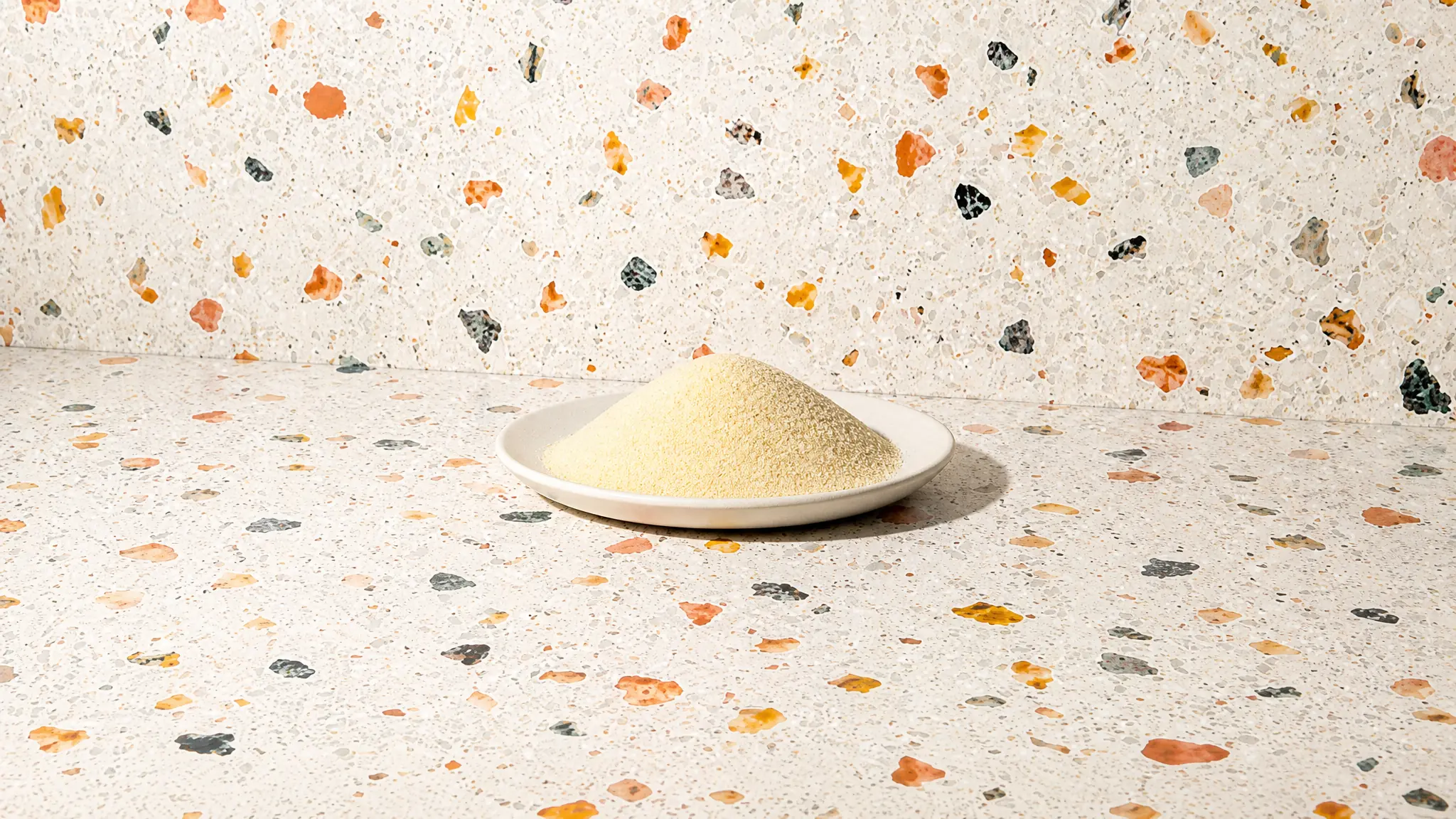
Semolina
Grain
Last updated July 5, 2026. The Tummi Food Team maintains this Can I Feed This safety guide guide. Supporting links appear in Sources when available.



Clinically reviewed by Andria Procopio and Arefa Mohamed
Direct answer
Can babies eat Semolina?
Yes, babies can eat semolina from around 6 months old once they are ready for solids, prepared appropriately.
- Serve Age6+months
Most babies start solids around 6 months once they show readiness signs. Match the texture and serving size to your baby's skills.
- Allergens
Semolina is flagged for wheat or gluten. Introduce common allergens in a baby-safe form and follow your clinician's advice if your baby is higher risk.
- Choking Risk123451
Lower choking risk when served in the right texture. Always supervise meals and adjust the shape for your baby.
This guide is for everyday food prep questions. Ask your pediatrician about medical concerns, feeding delays, allergy plans, or serious reactions.
How Do You Serve Semolina?
How to serve Semolina to babies 6 months and older
- 1Cook semolina into a smooth, lump-free porridge using breast milk, formula, or water; if using cow's milk, use only a small amount and only after confirming no dairy allergy.
- 2Aim for a thick but spoonable texture (about 1:4–1:5 semolina to liquid); cool and test temperature before serving.
- 3Serve spoon-fed or preload small amounts in a soft cup or tray so baby can scoop; stir in mashed fruits, vegetables, or a pinch of mild spice for extra flavor.
- 4Never add honey. If offering couscous, mix it into a sauce or plain yogurt so the tiny grains stick together and are easier for baby to manage.
How to serve Semolina to babies 9 months and older
- 1Make a smooth semolina porridge using breast milk, formula, or water — avoid honey; cook until thick but still spoonable and serve warm (not hot).
- 2For patties, pancakes, or soft dumplings: mix cooked semolina so it holds together, form small bite-sized pieces, and lightly pan-fry or bake until set; soft and moist pieces are easiest to grasp and chew.
- 3Any family pasta shapes are fine—cook until very soft and toss with sauce, mashed vegetables, or a little cheese so pieces clump and are easy to pick up.
- 4For couscous, mix into sauces or yogurt or gently press the grains so they clump; remove any hard grains and cool to a safe temperature before serving.
How to serve Semolina to babies 12 months and older
- 1Cook semolina porridge thicker than usual so it clings to a spoon — this makes it easier for little hands to scoop and practice self-feeding.
- 2Offer semolina in varied forms: breads, small pasta shapes, puddings, and grain-based casseroles to introduce different textures and chewing skills.
- 3Cut or shape firmer semolina foods into small, easy-to-pick-up pieces; avoid long strands or large chunks that are hard to handle.
- 4Encourage finger-feeding and utensil practice; expect messes as coordination improves. Always supervise closely.
Is Semolina a Common Allergen?
Semolina is made from durum wheat and contains gluten, so it is unsafe for children with celiac disease, non‑celiac gluten sensitivity, or a wheat allergy. Parents should avoid semolina-containing products (including many pastas, couscous, and some baked goods), check labels for wheat or durum, and be alert for cross-contamination. Consider certified gluten‑free substitutes (rice, corn, or gluten‑free pasta) and consult your pediatrician or dietitian with any concerns.
Is Semolina a Choking Hazard?
Very Low Choking Risk
Semolina is generally a low choking risk when it’s prepared in a way that matches a child’s age and developmental skills, though any food can theoretically cause choking. Watch your baby closely during meals, stay within arm’s reach, and be familiar with infant choking first aid so you can respond quickly if needed.
Have More Questions?
Yes. Semolina can be introduced around 6 months when your baby is ready for solids, offering a source of energy, iron, and protein.
Yes. Semolina provides essential nutrients like B vitamins, iron, and protein, supporting growth and development in babies.
Yes, but it is a wheat product and contains gluten, which is a common allergen. Consult with your pediatrician if your baby has gluten sensitivities or allergies.
No. When properly prepared and served in appropriate textures, semolina is not a choking hazard for babies.
No. Semolina is made from durum wheat and contains gluten, so it is not suitable for babies with celiac disease or gluten intolerance.
Save Semolina to your food log
Track foods, reactions, and prep notes in Tummi when you want to keep your baby's feeding history in one place.
Sources
- Food Allergy Research & Education — Wheat Allergy foodallergy.org
- American College of Allergy, Asthma & Immunology — Wheat Allergy acaai.org
- Food-Dependent, Exercise-Induced Anaphylaxis: Diagnosis and Management in the Outpatient Setting (J Allergy Clin Immunol Pract, 2017) doi.org
- Oral Allergy Syndrome: An Update for Stomatologists (Journal of Allergy, 2015) doi.org
What Other Grain Can Babies Eat?
See all →
Source-Linked Guidance
See the evidence behind the guide.
Food guides show direct links to public-health guidance and research when supporting references are available. Source inclusion does not imply endorsement.
 Centers for Disease Control and Prevention
Developmental milestones, nutrition guidelines, and allergen introduction timelines.
 American Academy of Pediatrics
Evidence-based feeding recommendations from the leading pediatric authority.
 National Institutes of Health
Peer-reviewed research on infant nutrition, allergies, and food safety.