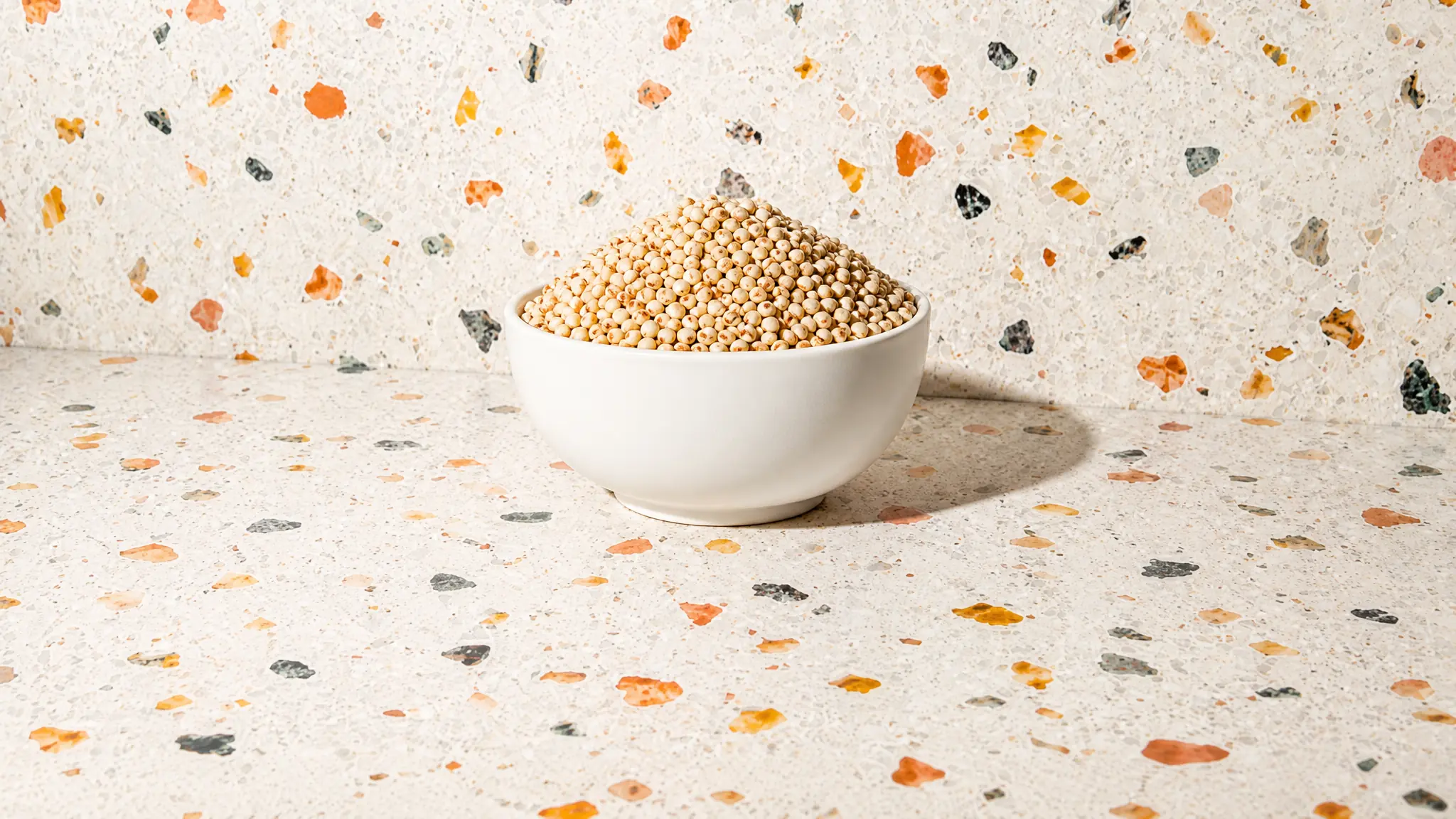
Sorghum
Grain
Last updated July 5, 2026. The Tummi Food Team maintains this Can I Feed This safety guide guide. Supporting links appear in Sources when available.



Clinically reviewed by Andria Procopio and Arefa Mohamed
Direct answer
Can babies eat Sorghum?
Babies can eat sorghum around 6 months, once they are developmentally ready for solids, when it is cooked until soft and served mashed or as porridge.
- Serve Age6+months
Most babies start solids around 6 months once they show readiness signs. Match the texture and serving size to your baby's skills.
- No Allergens
Sorghum is not flagged as one of the major allergens tracked in this database. Still watch your baby closely when serving any new food.
- Choking Risk123451
Lower choking risk when served in the right texture. Always supervise meals and adjust the shape for your baby.
This guide is for everyday food prep questions. Ask your pediatrician about medical concerns, feeding delays, allergy plans, or serious reactions.
How Do You Serve Sorghum?
How to serve Sorghum to babies 6 months and older
- 1Cook sorghum until very soft and porridge-like — simmer 30–45 minutes or pressure-cook until grains easily mash with a fork; blend or press through a sieve for a smooth, spoonable texture.
- 2Use nutrient-rich liquids (buttermilk, full-fat coconut milk, or low-sodium vegetable stock) to cook or thin the porridge, finishing with a small knob of butter or ghee and a pinch of mild spices for flavor.
- 3For finger-food practice, mash well-cooked sorghum with soft cooked vegetables or ground meat and form into small, soft balls, fritters, or pancake/waffle strips. Make pieces bite-sized to reduce choking risk.
- 4For spoon-feeding, aim for a smooth, slightly thick porridge that holds on the spoon; thin with breastmilk, formula, or cooking liquid to reach the right consistency and always check temperature before serving.
- 5Store leftovers in the fridge up to 48 hours or freeze portions; reheat until steaming and stir well, and do not add salt or honey.
How to serve Sorghum to babies 9 months and older
- 1Cook sorghum until very soft and tender; fully cooked grains are easier to mash and safer for baby feeding.
- 2For porridge, blend or mash cooked sorghum with breastmilk, formula, or water to a smooth, spoonable consistency that can be scooped.
- 3Make fritters or small meatballs by combining mashed sorghum with finely chopped vegetables or ground meat; form small, firm pieces that hold together and cook until done.
- 4To introduce loose grains or grain salads, press or lightly mash the grains so they clump together, or mix them into scoopable foods like yogurt or mashed vegetables to reduce loose, hard bits.
- 5Serve pancakes, waffles, or fritters cut into thin strips or bite-sized pieces, check they are cool enough, and always supervise during self-feeding.
How to serve Sorghum to babies 12 months and older
- 1Cook sorghum until grains are very soft and can be mashed between your thumb and finger; drain and cool before serving.
- 2Serve small spoonfuls of whole cooked grains as finger food or mix into grain salads. For easier pickup, lightly press or flatten grains into small patties or form into soft balls.
- 3Stir cooked sorghum into scoopable dishes (yogurt, mashed vegetables, or mild sauces) so the grains bind together and are easier for little hands to manage.
- 4Offer sorghum-based breads, pastas, pancakes, or popped sorghum as texture-appropriate options, and always supervise closely during meals to reduce choking risk.
Is Sorghum a Common Allergen?
Sorghum is a naturally gluten-free grain and is generally safe for children with celiac disease or gluten sensitivity. However, cross-contact with wheat, barley or rye can occur during growing, harvesting, or processing—look for a “gluten-free” label if strict avoidance is required. Sorghum is not one of the common top-9 food allergens and true sorghum allergy is rare, but watch for any signs of an allergic reaction (hives, swelling, vomiting, breathing difficulty) and seek medical care if they appear. Also check product labels for advisory statements, as some sorghum products may be processed in facilities that handle nuts, dairy, soy, or other allergens.
Is Sorghum a Choking Hazard?
Very Low Choking Risk
Loose whole sorghum grains and popped/puffed sorghum can pose an aspiration risk because tiny, dry pieces are light and may be inhaled. Always supervise babies closely during meals (stay within arm’s reach) and watch for gagging, persistent coughing, difficulty breathing, or silence—signs that require immediate attention. If a baby is choking and cannot cough or breathe, begin emergency choking procedures and seek immediate medical help.
Have More Questions?
Yes. Sorghum can be offered around 6 months once your baby is developmentally ready for solids; cook it until soft and serve it mashed or as porridge.
Yes. Sorghum can be included as one of a variety of grains in a baby's diet once they are ready for solids, but it should not be relied on as the sole source of nutrition.
Sorghum itself is gluten-free, but a baby with diagnosed celiac disease should receive only a product whose gluten-free status is verified because cross-contact with wheat, barley, or rye can occur.
Yes. Loose whole sorghum grains and popped sorghum can be choking hazards for babies and young children; offer sorghum cooked until soft and mashed or incorporated into porridge instead.
No. Do not give popped sorghum to a 6-month-old because popcorn and similar small, dry snack foods are choking hazards for young children; offer soft cooked sorghum porridge instead.
Save Sorghum to your food log
Track foods, reactions, and prep notes in Tummi when you want to keep your baby's feeding history in one place.
Sources
- A multidisciplinary approach of outdoor aeroallergen selection for skin prick testing in the geographical area of Greater Istanbul doi.org
- Is There Such a Thing as 'Anti-Nutrients'? A Narrative Review of Perceived Problematic Plant Compounds doi.org
- Bioactive constituents in pulses and their health benefits doi.org
- Effect of household cooking methods on nutritional and anti nutritional factors in green cowpea pods doi.org
- Phytic acid, in vitro protein digestibility, dietary fiber, and minerals of pulses as influenced by processing methods doi.org
- Renal lithiasis and nutrition doi.org
- Are Anti-Nutrients Harmful? (Harvard T.H. Chan School of Public Health) hsph.harvard.edu
- Innovations in Health Value and Functional Food Development of Quinoa doi.org
What Other Grain Can Babies Eat?
See all →
Source-Linked Guidance
See the evidence behind the guide.
Food guides show direct links to public-health guidance and research when supporting references are available. Source inclusion does not imply endorsement.
 Centers for Disease Control and Prevention
Developmental milestones, nutrition guidelines, and allergen introduction timelines.
 American Academy of Pediatrics
Evidence-based feeding recommendations from the leading pediatric authority.
 National Institutes of Health
Peer-reviewed research on infant nutrition, allergies, and food safety.