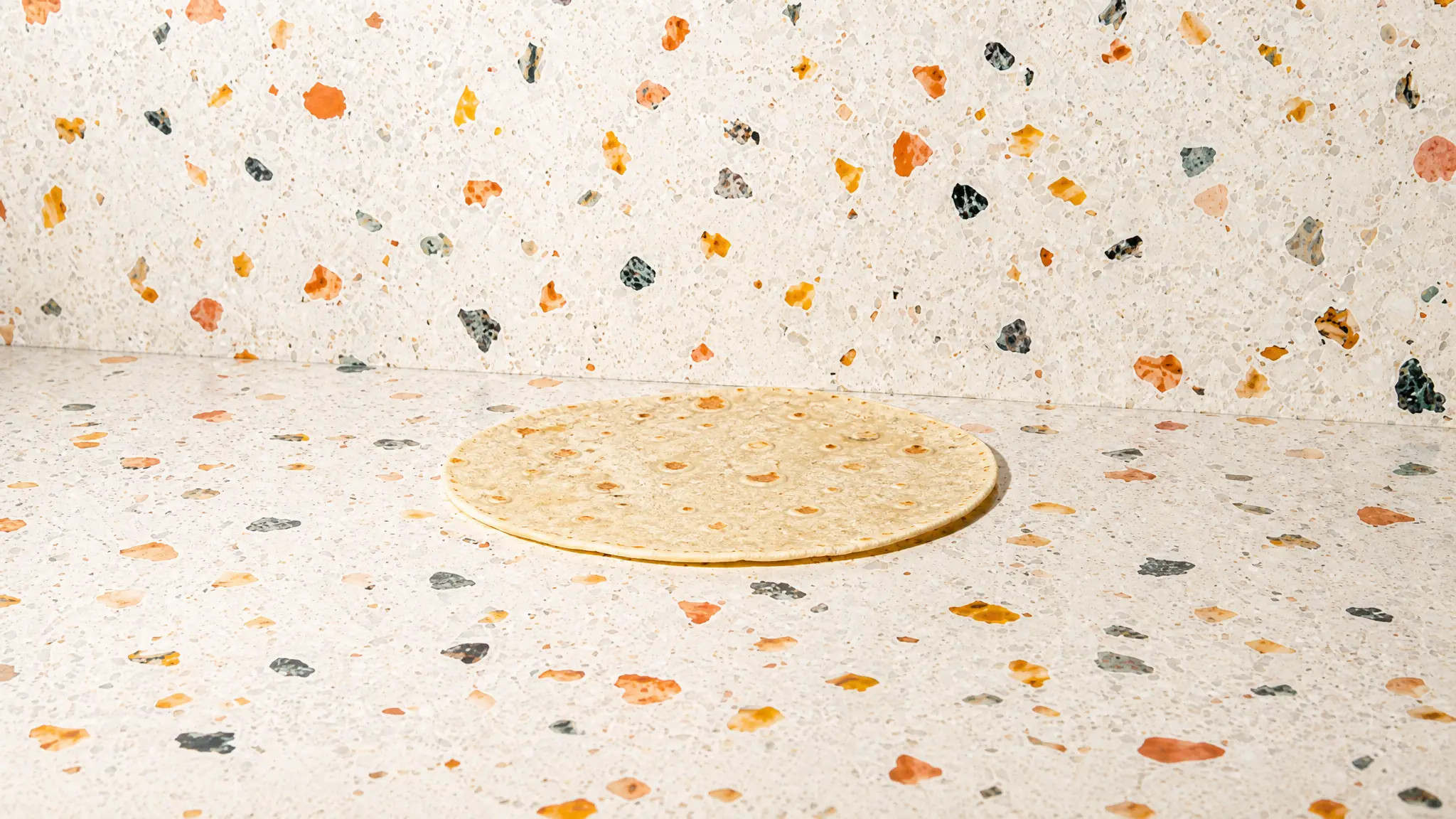
Tortilla
Grain
Last updated July 5, 2026. The Tummi Food Team maintains this Can I Feed This safety guide guide. Supporting links appear in Sources when available.



Clinically reviewed by Andria Procopio and Arefa Mohamed
Direct answer
Can babies eat Tortilla?
Yes, soft corn tortillas can be introduced around 6 months when starting solids; wait until after one year for wheat varieties.
- Serve Age6+months
Most babies start solids around 6 months once they show readiness signs. Match the texture and serving size to your baby's skills.
- Allergens
Tortilla is flagged for wheat or gluten. Introduce common allergens in a baby-safe form and follow your clinician's advice if your baby is higher risk.
- Choking Risk123451
Lower choking risk when served in the right texture. Always supervise meals and adjust the shape for your baby.
This guide is for everyday food prep questions. Ask your pediatrician about medical concerns, feeding delays, allergy plans, or serious reactions.
How Do You Serve Tortilla?
How to serve Tortilla to babies 6 months and older
- 1Cut a soft corn tortilla into halves or long strips about the width of two adult fingers so the baby can easily grasp and gnaw.
- 2If the tortilla is dry, briefly steam it or hold it in warm (not hot) broth for a few seconds to soften; avoid hot liquids that could burn.
- 3For easier eating, shred or finely cut the tortilla and fold it into scoopable foods like mashed beans so pieces stay moist and are easy to pick up.
- 4Always supervise while feeding and check each piece for softness and appropriate size to reduce choking risk.
How to serve Tortilla to babies 9 months and older
- 1Cut soft corn tortillas into small, bite-sized pieces (about 1/2–1 inch) so they’re easy to pick up with a pincer grasp.
- 2Offer a mix: serve some pieces plain and some lightly dipped in cool broths, stews, or mild salsa to gently introduce new flavors and textures.
- 3Avoid crunchy chips and large folded pieces that could pose a choking risk; use soft, pliable pieces instead.
- 4If using wheat/flour tortillas, briefly warm them (about 10–15 seconds) until pliable, then let cool slightly so they’re less gummy and easier to mash.
How to serve Tortilla to babies 12 months and older
- 1Warm soft corn, wheat, or grain-free tortillas briefly to make them more pliable and less likely to tear when folding or cutting.
- 2Use them for quesadillas, soft tacos, or enchiladas; cut tacos in half or into small pieces to make them easier for little hands to hold and self-feed.
- 3Expect toddlers to often take tacos apart and eat components separately — this is totally normal; offer soft, mild fillings and serve components separately if that helps.
- 4Remove or modify any choking hazards by finely chopping fillings, avoiding hard chunks, and letting food cool to a safe temperature before serving.
Is Tortilla a Common Allergen?
This tortilla contains gluten and is not suitable for children with celiac disease or gluten sensitivity. It does not list milk, eggs, soy, peanuts, tree nuts, sesame, fish, or shellfish as allergens based on the provided data, but always check the product label for added ingredients or cross-contamination warnings. For those avoiding gluten, choose corn tortillas or products labeled certified gluten-free. When in doubt, contact the manufacturer for ingredient and allergen handling details.
Is Tortilla a Choking Hazard?
Low Choking Risk
Soft tortillas present a low choking risk for babies when matched to their developmental chewing skills, but any food can pose a risk if a child isn’t developmentally ready. Crispy or brittle tortillas and tortilla chips are choking hazards for younger children and are best reserved for older kids with more mature eating skills. Always keep your child seated and within arm’s reach during meals, watch closely for signs of choking or gagging, and be familiar with infant/toddler choking first aid.
Have More Questions?
Yes. It's generally safe to freeze tortillas for later use, but avoid freezing freshly steamed or hot tortillas to prevent moisture buildup; wrap them tightly or store in air-tight containers.
Yes. To store safely, place pureed or mashed tortillas in airtight containers or freezer bags, remove excess air, and label with date to prevent freezer burn and ensure freshness.
It depends. Organic tortillas may have fewer pesticides and synthetic additives, but conventional tortillas are often more affordable. Check product labels to compare ingredients and standards.
Yes. Combining tortillas with pureed vegetables, beans, or proteins can provide balanced nutrition and introduce your baby to new flavors; ensure textures are appropriate for your baby's stage.
For babies starting solids around 6 months, serving small, age-appropriate portions—such as torn or cut tortillas—about 1-2 times daily is recommended, gradually increasing as tolerated.
Save Tortilla to your food log
Track foods, reactions, and prep notes in Tummi when you want to keep your baby's feeding history in one place.
Sources
- Food Allergy Research & Education — Wheat Allergy foodallergy.org
- American College of Allergy, Asthma & Immunology — Wheat Allergy acaai.org
- Kashyap RR & Kashyap RS (2015) — Oral Allergy Syndrome: An Update for Stomatologists doi.org
- Feldweg AM (2017) — Food-Dependent, Exercise-Induced Anaphylaxis doi.org
- Scibilia J et al. (2008) — Maize food allergy: a double-blind placebo-controlled study doi.org
- Blackman AC et al. (2019) — Emerging triggers of food protein-induced enterocolitis syndrome doi.org
- Mehr S & Campbell DE (2019) — Food protein-induced enterocolitis syndrome: guidelines summary and practice recommendations doi.org
What Other Grain Can Babies Eat?
See all →
Source-Linked Guidance
See the evidence behind the guide.
Food guides show direct links to public-health guidance and research when supporting references are available. Source inclusion does not imply endorsement.
 Centers for Disease Control and Prevention
Developmental milestones, nutrition guidelines, and allergen introduction timelines.
 American Academy of Pediatrics
Evidence-based feeding recommendations from the leading pediatric authority.
 National Institutes of Health
Peer-reviewed research on infant nutrition, allergies, and food safety.