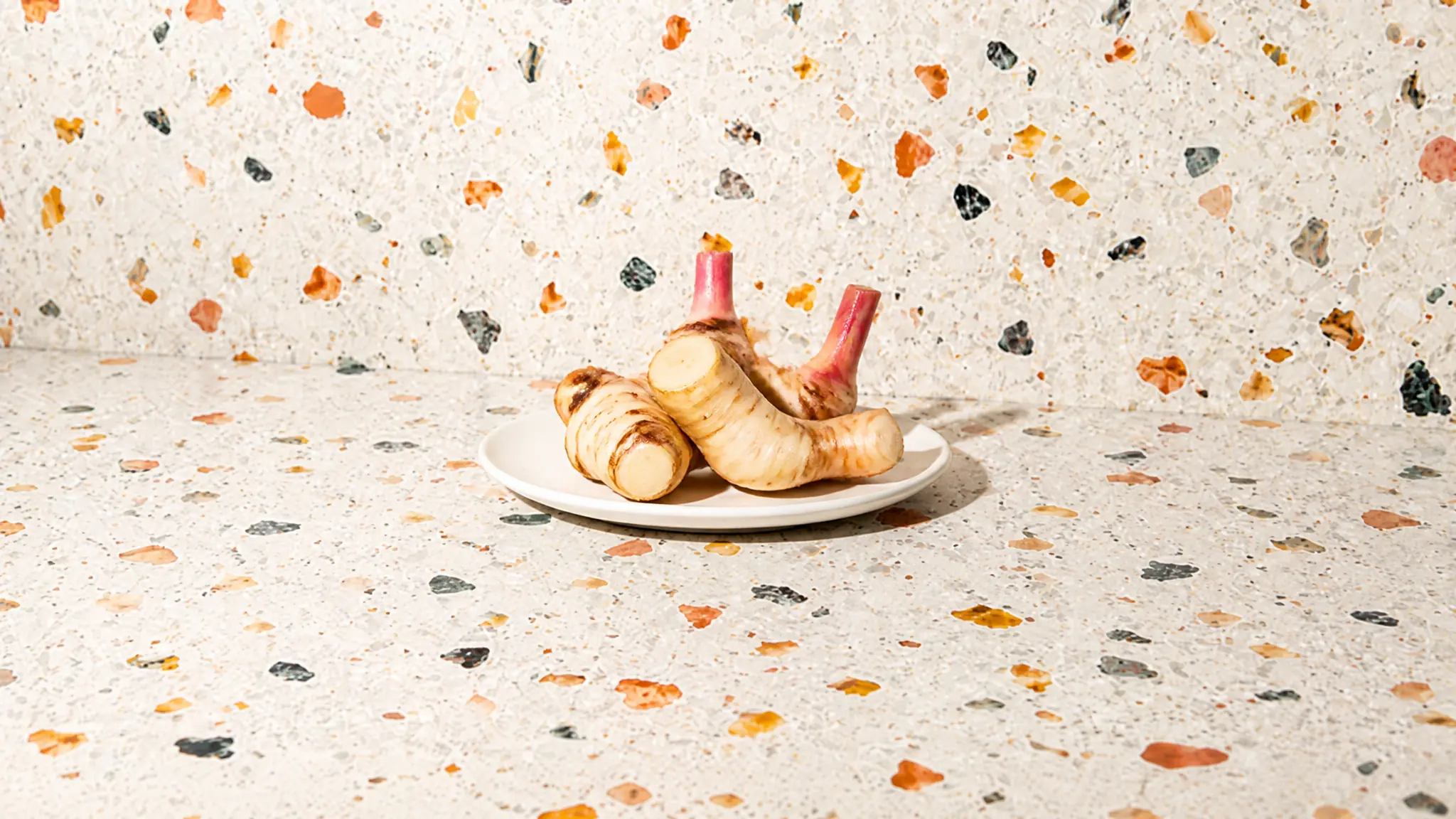
Galangal
Herb/Spice
Last updated July 5, 2026. The Tummi Food Team maintains this Can I Feed This safety guide guide. Supporting links appear in Sources when available.



Clinically reviewed by Andria Procopio and Arefa Mohamed
Direct answer
Can babies eat Galangal?
Yes, babies can eat galangal as early as 6 months, when they start solids, prepared in small, gentle amounts.
- Serve Age6+months
Most babies start solids around 6 months once they show readiness signs. Match the texture and serving size to your baby's skills.
- No Allergens
Galangal is not flagged as one of the major allergens tracked in this database. Still watch your baby closely when serving any new food.
- Choking Risk123451
Lower choking risk when served in the right texture. Always supervise meals and adjust the shape for your baby.
This guide is for everyday food prep questions. Ask your pediatrician about medical concerns, feeding delays, allergy plans, or serious reactions.
How Do You Serve Galangal?
How to serve Galangal to babies 6 months and older
- 1Grate or use powdered galangal sparingly—start with a pinch (about 1/8 tsp) mixed into soft, scoopable foods like porridge, congee, lentils, or softened rice and meatballs.
- 2Cook fresh galangal before serving to mellow its sharp, peppery flavor; simmer slices in the dish or add to broth then remove the slices.
- 3Puree or finely strain mixtures after adding galangal to remove fibrous or hard pieces. Check for and discard any thick bits to prevent choking.
- 4Start with a tiny amount and wait 2–3 days between new foods to watch for any reactions; consult your pediatrician if you see unusual rashes, vomiting, or breathing changes.
How to serve Galangal to babies 12 months and older
- 1Grate or use powdered galangal to gently season cooked dishes—start with a very small amount and mix well so the flavor is mild.
- 2If using fresh galangal, cut it into extremely thin slices and cook until soft to reduce chewiness and choking risk.
- 3For open-cup practice, offer a small amount of cooled, weak galangal tea: steep a thin slice briefly, strain, and let it cool completely before serving.
- 4Introduce galangal on its own first and wait several days to watch for any skin or digestive reactions; stop and seek advice if you notice rash, vomiting, or swelling.
How to serve Galangal to babies 18 months and older
- 1Peel and prepare galangal by grating finely, using powdered form, or cutting into very thin matchsticks so it mixes smoothly into foods; finely grated or powdered is easiest for young children.
- 2Stir small amounts into soups, stews, curries, purees, or family meals—start with a pinch and increase slowly based on your child’s tolerance and chewing ability.
- 3For smoothies, add a small amount (about 1/8–1/4 teaspoon) of grated or powdered galangal and blend thoroughly so there are no fibrous pieces.
- 4Make galangal tea by simmering thin slices briefly, then cool completely before serving in an open cup; never give hot liquid or whole chunks and always supervise during mealtimes.
- 5Check texture and chewing: if pieces are fibrous or hard to chew, grate more finely, use powdered form, or discard the piece to prevent choking.
Is Galangal a Common Allergen?
Galangal is not a common food allergen and is generally safe in the small amounts used in cooking. Rarely it can cause skin irritation or an allergic-type rash on contact, and spices can trigger reactions in people sensitized to related pollens (e.g., mugwort/birch) or with known spice allergies. If your child has a diagnosed ginger or spice allergy, avoid galangal and speak with your pediatrician; otherwise it’s usually safe when cooked—watch for any rash, swelling, vomiting, or breathing trouble after exposure. Also check prepared foods for cross-contamination or added ingredients that may contain other allergens.
Is Galangal a Choking Hazard?
Very Low Choking Risk
Thick pieces of raw or dried galangal can be very firm and hard to chew, which increases the risk of choking. Take care to avoid offering firm chunks and always supervise your child closely—stay within arm’s reach—and be prepared to respond if they gag or choke. Familiarize yourself with basic choking first aid so you can act quickly if needed.
Have More Questions?
Yes. Galangal can be introduced to babies around 6 months old and used in small amounts in their meals, considering their overall diet and developmental readiness.
Yes. Galangal provides some carbohydrate, fiber, and antioxidant phytonutrients, making it a nutritious addition in small, cooked amounts for babies.
No. It is not a common allergen, but those with sensitive skin might develop contact rashes; introduce in small quantities and observe for reactions.
It can be. Raw or dried galangal in thick pieces poses a choking risk, so it should be prepared and served in a safe, age-appropriate manner.
Yes. After a baby's first birthday, galangal tea can be offered when cooled, but avoid giving any herbal teas or new beverages to under 12 months old.
Save Galangal to your food log
Track foods, reactions, and prep notes in Tummi when you want to keep your baby's feeding history in one place.
Sources
- A Review on the Pharmacological Activities and Phytochemicals of Alpinia officinarum (Galangal) Extracts doi.org
- Revealing the Reversal Effect of Galangal (Alpinia galanga L.) Extract Against Oxidative Stress in Metastatic Breast Cancer Cells and Normal Fibroblast Cells doi.org
- Alpinia: the gold mine of future therapeutics doi.org
- Erythema multiforme-like generalized allergic contact dermatitis caused by Alpinia galanga doi.org
- Thai Food Composition — Galangal (Mahidol University, Institute of Nutrition)
What Other Herb/Spice Can Babies Eat?
See all →
Source-Linked Guidance
See the evidence behind the guide.
Food guides show direct links to public-health guidance and research when supporting references are available. Source inclusion does not imply endorsement.
 Centers for Disease Control and Prevention
Developmental milestones, nutrition guidelines, and allergen introduction timelines.
 American Academy of Pediatrics
Evidence-based feeding recommendations from the leading pediatric authority.
 National Institutes of Health
Peer-reviewed research on infant nutrition, allergies, and food safety.