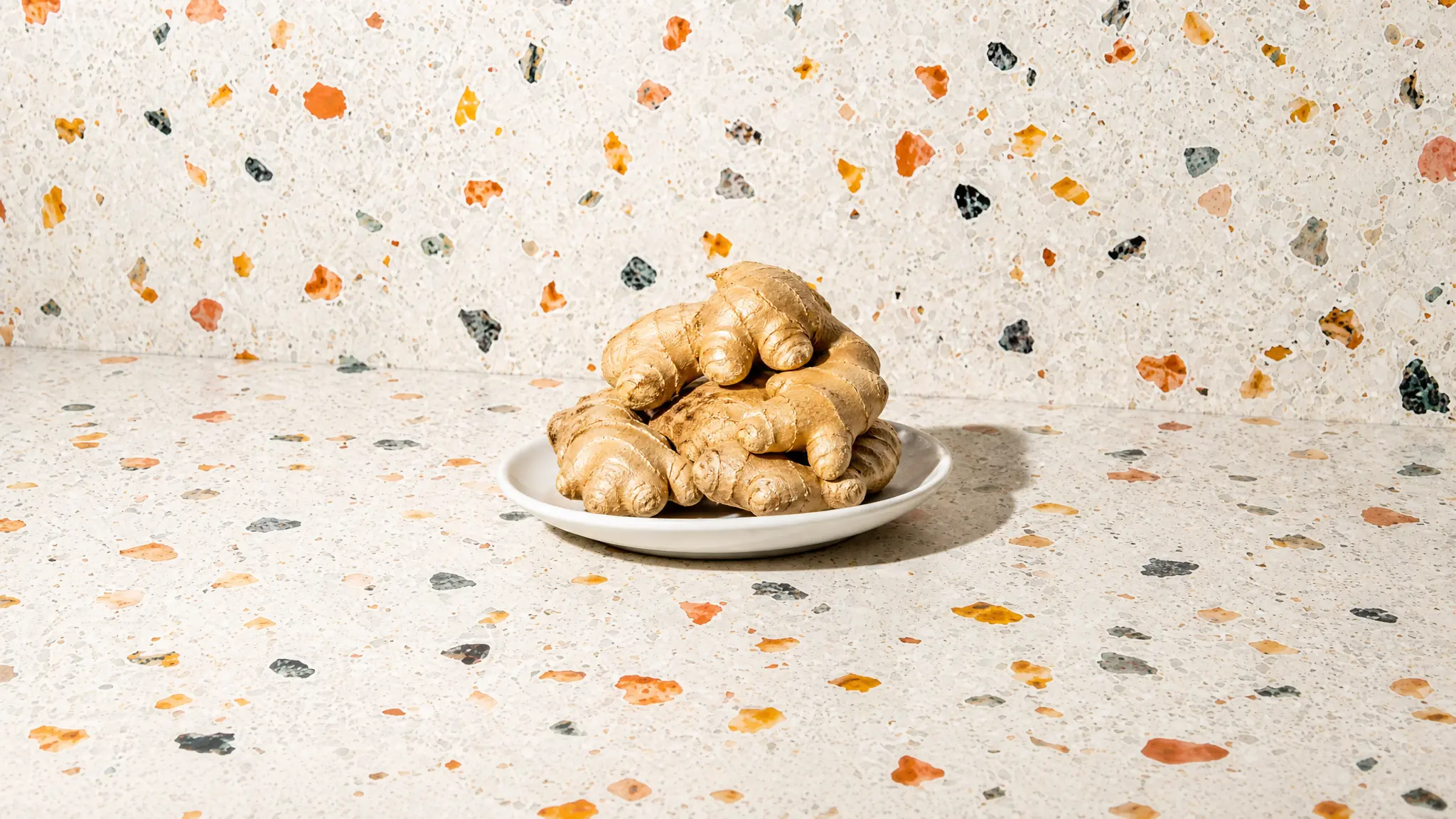
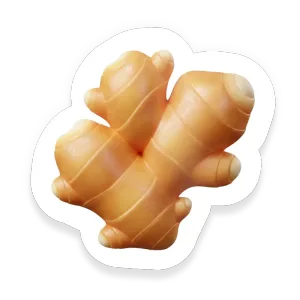
Ginger
Herb/Spice
Last updated July 5, 2026. The Tummi Food Team maintains this Can I Feed This safety guide guide. Supporting links appear in Sources when available.



Clinically reviewed by Andria Procopio and Arefa Mohamed
Direct answer
Can babies eat Ginger?
Yes, ginger can be introduced around 6 months of age in small, well-cooked amounts, after starting solids, ensuring it is used sparingly to suit babies' sensitive digestive systems.
- Serve Age6+months
Most babies start solids around 6 months once they show readiness signs. Match the texture and serving size to your baby's skills.
- No Allergens
Ginger is not flagged as one of the major allergens tracked in this database. Still watch your baby closely when serving any new food.
- Choking Risk123451
Lower choking risk when served in the right texture. Always supervise meals and adjust the shape for your baby.
This guide is for everyday food prep questions. Ask your pediatrician about medical concerns, feeding delays, allergy plans, or serious reactions.
How Do You Serve Ginger?
How to serve Ginger to babies 6 months and older
- 1Finely grate or very thinly mince fresh ginger so pieces are tiny and easy to blend into foods.
- 2Stir a very small pinch into purees, porridge, or mashed fruits and vegetables—start tiny and increase slowly to taste.
- 3Cook briefly (about 1–2 minutes) with the food to mellow the sharp flavor if you prefer a milder taste.
- 4Keep portions very small and ensure the final texture is soft and easily mashable to avoid choking; watch for any new reactions.
How to serve Ginger to babies 12 months and older
- 1Start small: add a pinch of powdered ginger or a scant amount of finely grated fresh ginger to dishes to introduce the flavor gradually.
- 2Use thinly sliced fresh ginger for a mild texture; slice very thin and remove larger pieces before serving to prevent chewy bits.
- 3Fold grated or powdered ginger into batters and batters (muffins, pancakes, crepes) so the flavor is evenly distributed and no concentrated pockets remain.
- 4Make a very mild ginger infusion by steeping a tiny thin slice in hot water 5–10 minutes, cool to lukewarm, and offer a few supervised sips from an open cup — well cooled before serving.
How to serve Ginger to babies 18 months and older
- 1Add ginger to smoothies, sauces, soups, and baked goods using finely grated or very finely minced pieces so they blend smoothly and are easy to chew.
- 2When cooking with fresh ginger, simmer or roast it until soft to reduce fibrous texture; soften it thoroughly before serving.
- 3Avoid firm, chewy forms—candied ginger, large pickled slices, or thick raw chunks—because they can be choking hazards. Use ground ginger, a light ginger syrup, or a smooth purée as safer alternatives.
- 4Serve ginger-flavored teas only after they have cooled, and start with small amounts to check taste and tolerance.
Is Ginger a Common Allergen?
Ginger is not a common 'major' food allergen, but allergic reactions can occur. Some people get contact dermatitis or IgE-mediated symptoms (skin, mouth, respiratory) and those with pollen allergies may experience oral allergy syndrome (mouth/throat itching) after raw ginger. Prepared ginger products can include other allergens or contaminants, so always check labels. If a child develops hives, swelling, breathing difficulty, or throat tightness after ginger, seek medical care and allergy evaluation.
Is Ginger a Choking Hazard?
Very Low Choking Risk
Grated or powdered ginger presents a low choking risk, but thick pieces—such as slices of pickled or candied ginger—can be firm, hard to chew, and increase the danger of choking. Always stay within an arm’s reach and closely supervise babies during meals. Know the signs of choking and have a plan for infant/toddler choking first aid.
Have More Questions?
Yes. Ginger can be stored in the refrigerator for up to a week or frozen for several months, making it easy to keep on hand for cooking and flavoring.
Yes. You can freeze freshly grated ginger in an ice cube tray, then transfer the cubes to a sealed bag for easy portioning in baby food preparations.
Yes. Choosing organic ginger reduces exposure to pesticides, which is especially important for babies, but conventional ginger is also safe and nutritious if properly washed.
Yes. Combining ginger with mild fruits like apple or pear can create flavorful purees that introduce new tastes while maintaining a gentle texture.
Typically, a small amount, such as ¼ teaspoon of grated ginger, is sufficient for baby's meals—servings should be age-appropriate and gradually increased as tolerated.
Save Ginger to your food log
Track foods, reactions, and prep notes in Tummi when you want to keep your baby's feeding history in one place.
Sources
- Ginger in gastrointestinal disorders: A systematic review of clinical trials doi.org
- Bioactive Compounds and Bioactivities of Ginger (Zingiber officinale Roscoe) doi.org
- Allergy to ginger with cysteine proteinase GP-I as the relevant allergen doi.org
- Occupational allergic contact dermatitis from spices doi.org
- Metabolomics in nephrotoxicity doi.org
- Comparing the effect of acupressure and ginger on chemotherapy gastrointestinal side-effects in children with leukemia doi.org
- Latest Update on Prevention of Acute Chemotherapy-Induced Nausea and Vomiting in Pediatric Cancer Patients doi.org
- Anti-emetic effect of ginger powder versus placebo as an add-on therapy in children and young adults receiving high emetogenic chemotherapy doi.org
- Efficacy of ginger as antiemetic in children with acute gastroenteritis: a randomised controlled trial doi.org
- Ginger — National Center for Complementary and Integrative Health nccih.nih.gov
What Other Herb/Spice Can Babies Eat?
See all →


Source-Linked Guidance
See the evidence behind the guide.
Food guides show direct links to public-health guidance and research when supporting references are available. Source inclusion does not imply endorsement.
 Centers for Disease Control and Prevention
Developmental milestones, nutrition guidelines, and allergen introduction timelines.
 American Academy of Pediatrics
Evidence-based feeding recommendations from the leading pediatric authority.
 National Institutes of Health
Peer-reviewed research on infant nutrition, allergies, and food safety.