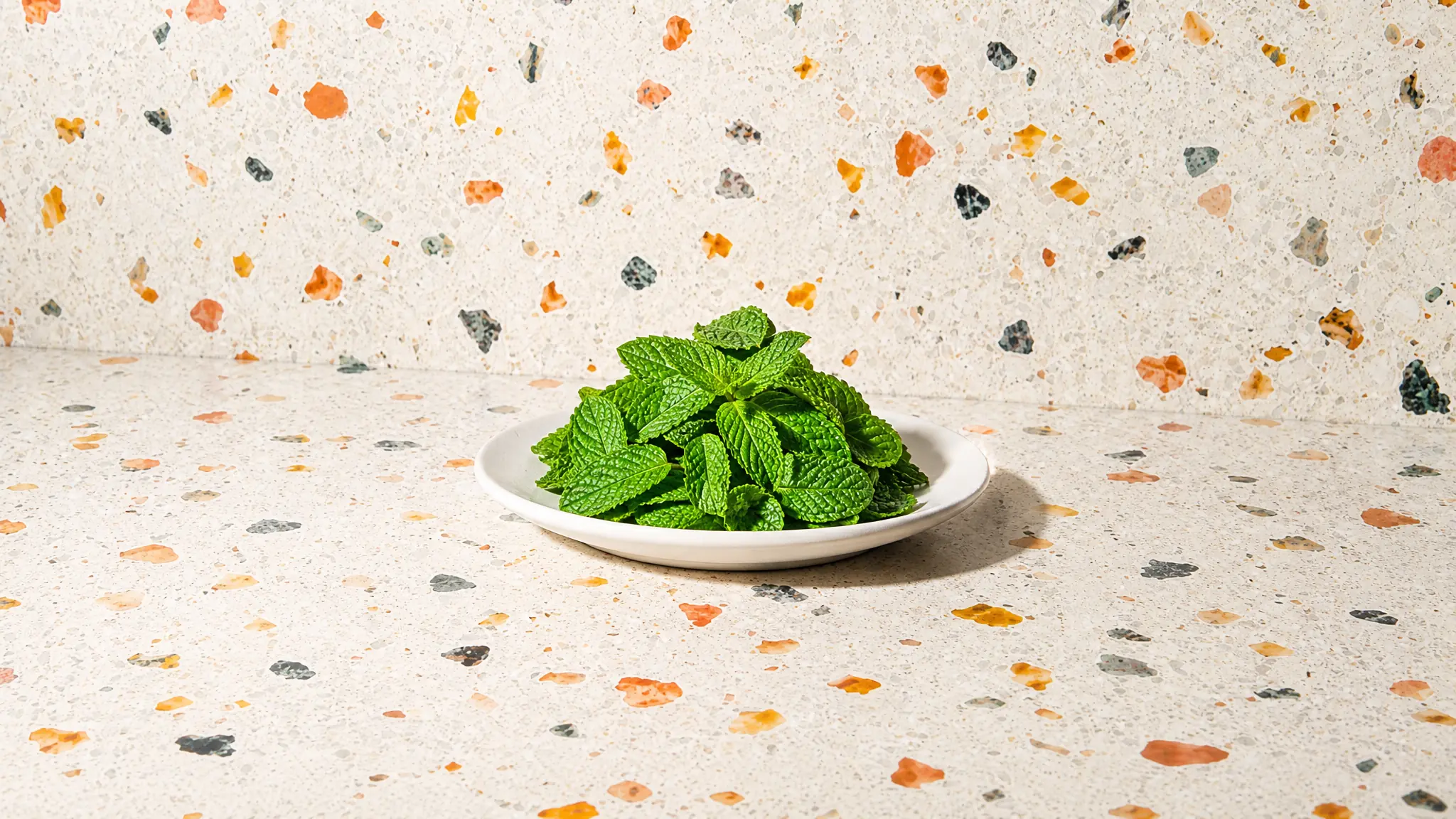
Mint
Herb/Spice
Last updated July 5, 2026. The Tummi Food Team maintains this Can I Feed This safety guide guide. Supporting links appear in Sources when available.



Clinically reviewed by Andria Procopio and Arefa Mohamed
Direct answer
Can babies eat Mint?
Yes, mint can be introduced around 6 months of age when starting solids, as long as it's used in small, diluted amounts.
- Serve Age6+months
Most babies start solids around 6 months once they show readiness signs. Match the texture and serving size to your baby's skills.
- No Allergens
Mint is not flagged as one of the major allergens tracked in this database. Still watch your baby closely when serving any new food.
- Choking Risk123451
Lower choking risk when served in the right texture. Always supervise meals and adjust the shape for your baby.
This guide is for everyday food prep questions. Ask your pediatrician about medical concerns, feeding delays, allergy plans, or serious reactions.
How Do You Serve Mint?
How to serve Mint to babies 6 months and older
- 1Wash mint, remove stems, and very finely chop so no leaf fragments remain.
- 2Mix a small amount into soft, scoopable foods like mashed potatoes, yogurt, or large, very soft meatballs or patties. Start with 1/4–1/2 teaspoon per serving and increase only if the baby likes the flavor.
- 3Alternatively, blend mint into sauces or purees and drizzle a tiny amount over food to introduce the taste without fibrous bits.
- 4Keep textures soft and free of leaf pieces; observe for any digestive or allergic reactions and stop use if you notice symptoms.
How to serve Mint to babies 9 months and older
- 1Finely chop or chiffonade mint into very small pieces so leaf fragments are soft and hard to swallow pieces are avoided.
- 2Mix a small amount into soft foods (yogurt, purees, mashed avocado) so the child can taste the herb without large leaf bits.
- 3Start with a pinch and watch closely for coughing or reluctance; avoid whole leaves or large fragments that can stick in the mouth.
- 4Supervise every feeding and offer a small sip of water if bits stick; expect some spitting as they learn the texture.
- 5If you notice persistent coughing, rash, or breathing changes after trying mint, stop and consult a healthcare provider.
How to serve Mint to babies 18 months and older
- 1Wash and finely chop fresh mint, removing thick stems, and mix into soft foods (yogurt, mashed vegetables, sauces) so it blends without large pieces.
- 2Start with a small amount mixed into a familiar meal to check acceptance and flavour tolerance.
- 3Keep pieces very small and soft — no whole leaves or large chunks — and cut to match your child’s chewing ability to reduce choking risk.
- 4Always supervise during eating and watch for gagging or refusal; stop offering if your child consistently rejects it.
- 5Introduce herbs one at a time and avoid adding concentrated forms like essential oils to foods.
How to serve Mint to babies 24 months and older
- 1Chop fresh mint finely and mix into salads, dressings, sauces, or cooked dishes to add flavor without large leaves that can be hard to chew.
- 2Start with small amounts—mix a pinch into a familiar dish and increase gradually to check tolerance.
- 3When your child reliably takes bites and can handle larger pieces, offer a whole raw mint leaf or dishes with larger pieces, cutting leaves if needed to reduce choking risk.
- 4If there's known sensitivity to herbs, introduce mint and related herbs one at a time and watch for reactions. Stop and consult a clinician if you notice hives, vomiting, or breathing changes.
Is Mint a Common Allergen?
Mint is not a common food allergen, but some people can have contact reactions, oral allergy syndrome, or respiratory symptoms from mint/peppermint. Peppermint oil and concentrated forms can cause skin irritation and may worsen reflux, so avoid essential oils and strong extracts for babies or children with reflux. Watch for rash, swelling, itching, or breathing changes after ingestion or skin contact and seek medical care for any severe reactions.
Is Mint a Choking Hazard?
Very Low Choking Risk
Mint itself presents a low choking risk for most babies, but whole leaves or larger pieces can stick in the mouth and trigger gagging, coughing, or spitting as infants learn the texture. Gagging is common and not the same as choking, but leaf pieces could, in theory, contribute to an airway obstruction. Stay within arm’s reach and watch closely during meals so you can respond quickly if your baby has trouble breathing.
Have More Questions?
Yes, mint can be used in small amounts as a flavoring in baby foods once they are ready to start solids, around 6 months.
Yes, mint contains antioxidants and vitamins that support a baby's health, but it should be offered in small, age-appropriate portions.
No, mint is not a common allergen, but observe for any sensitivity, especially if the child is sensitive to other herbs in the Lamiaceae family.
No, mint itself is not a choking hazard when prepared properly; avoid large or whole leaves and chop finely if needed.
Yes, mint can be stored in the refrigerator for a few days or frozen in ice cubes for longer storage; use fresh or frozen mint in small quantities.
Save Mint to your food log
Track foods, reactions, and prep notes in Tummi when you want to keep your baby's feeding history in one place.
Sources
What Other Herb/Spice Can Babies Eat?
See all →
Source-Linked Guidance
See the evidence behind the guide.
Food guides show direct links to public-health guidance and research when supporting references are available. Source inclusion does not imply endorsement.
 Centers for Disease Control and Prevention
Developmental milestones, nutrition guidelines, and allergen introduction timelines.
 American Academy of Pediatrics
Evidence-based feeding recommendations from the leading pediatric authority.
 National Institutes of Health
Peer-reviewed research on infant nutrition, allergies, and food safety.