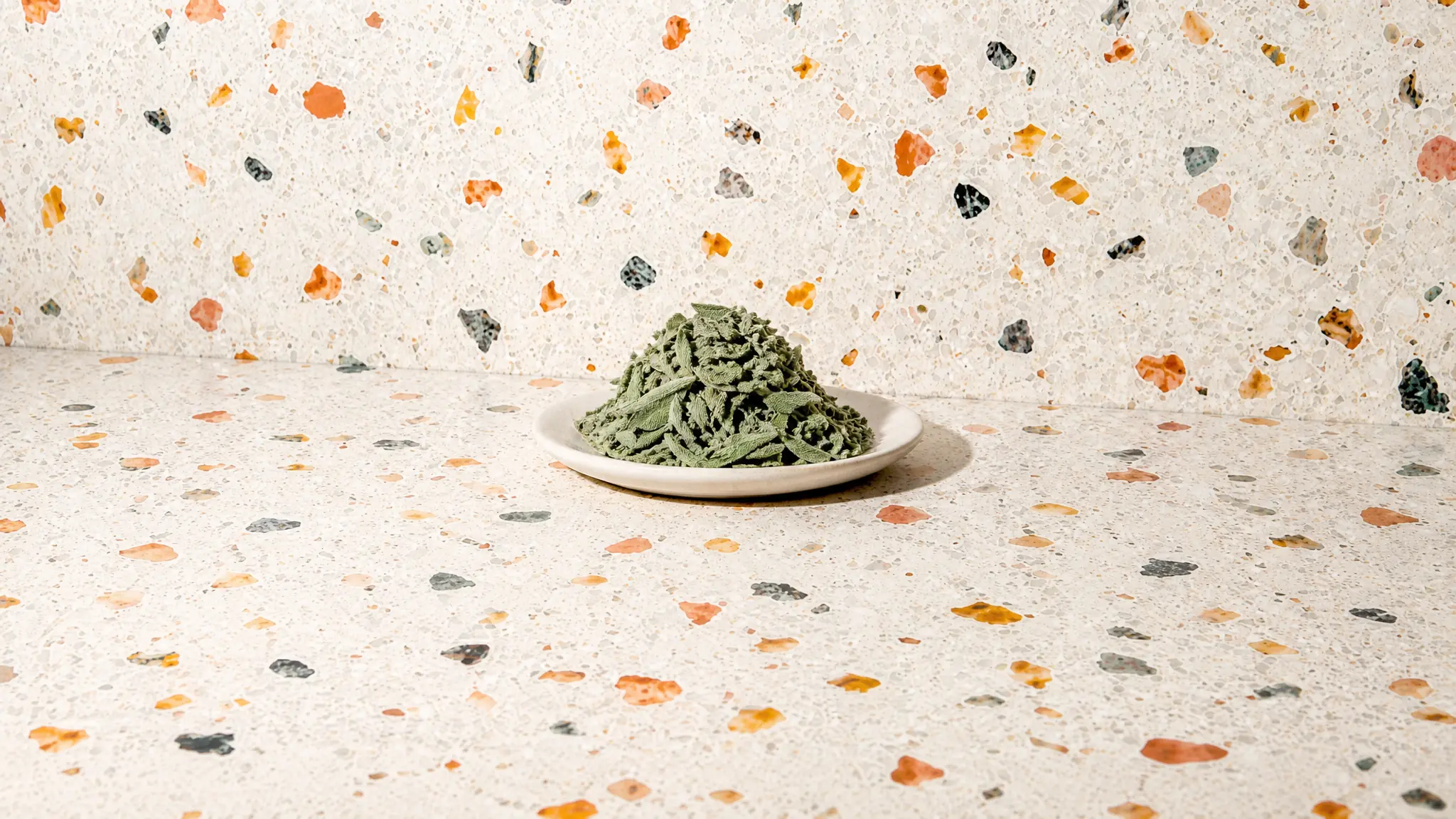
Sage
Herb/Spice
Last updated July 5, 2026. The Tummi Food Team maintains this Can I Feed This safety guide guide. Supporting links appear in Sources when available.



Clinically reviewed by Andria Procopio and Arefa Mohamed
Direct answer
Can babies eat Sage?
Yes, sage can be introduced around 6 months of age when starting solids, in small, well-cooked, or pureed amounts.
- Serve Age6+months
Most babies start solids around 6 months once they show readiness signs. Match the texture and serving size to your baby's skills.
- No Allergens
Sage is not flagged as one of the major allergens tracked in this database. Still watch your baby closely when serving any new food.
- Choking Risk123451
Lower choking risk when served in the right texture. Always supervise meals and adjust the shape for your baby.
This guide is for everyday food prep questions. Ask your pediatrician about medical concerns, feeding delays, allergy plans, or serious reactions.
How Do You Serve Sage?
How to serve Sage to babies 6 months and older
- 1Preparation: Rinse fresh sage, remove thick stems, and finely chop until very small; if using dried, start with a pinch (about 1/8 tsp).
- 2Cooking: Add chopped or powdered sage early in cooking so the flavor mellows—stir into purees, sauces, or stews and simmer 5–10 minutes.
- 3Serving and texture: Mix into mashed vegetables, soft pasta, or shredded tender poultry. Ensure no whole leaves remain to avoid choking.
- 4Amounts & storage: Use sparingly—herbs are potent—taste before serving and store leftovers in a sealed container in the fridge up to 48 hours.
How to serve Sage to babies 9 months and older
- 1Cut fresh sage into very thin ribbons or mince finely so pieces are small and soft to swallow.
- 2Mix a small amount into soft finger foods or combined dishes (mashed vegetables, soft pasta, yogurt) so the flavor and texture are diluted.
- 3Lightly cook sage briefly (sauté or steam) to soften leaves and reduce chewiness.
- 4Watch for small leaf fragments that can stick in the mouth; offer a sip of water if needed and supervise closely as they learn to handle the texture. Stay close while they eat.
How to serve Sage to babies 18 months and older
- 1Finely chop or cook sage and remove stems and whole leaves to avoid choking.
- 2Mix a small amount of chopped sage into soft family foods (soups, mashed vegetables, cooked grains) so flavors are familiar.
- 3Offer tiny portions at first (a pinch per serving) and watch your child while they eat — stay within arm’s reach until chewing and swallowing are reliable.
- 4Introduce new foods one at a time, waiting 2–3 days to monitor for reactions; consult your pediatrician if you notice any concerns.
How to serve Sage to babies 24 months and older
- 1Use powdered or very finely chopped sage to season shared foods—mix into sauces, soups, or mashed vegetables so the flavor is even.
- 2Wait until your child consistently chews and swallows larger pieces; a good sign is safe handling of other leafy greens.
- 3When ready, offer a single whole sage leaf only if it's cooked until very soft or lightly wilted, since raw leaves can be tough and fibrous.
- 4Always supervise mealtimes and cut or tear leaves into small, chewable pieces if you're unsure. Never leave unattended.
Is Sage a Common Allergen?
Sage is not a common food allergen and is generally safe in the small amounts used in cooking; however, rare allergic reactions have been reported and sage can cause allergic contact dermatitis in sensitive people. Avoid using concentrated sage products (essential oils or extracts) in infants and on broken skin. When giving foods containing sage, be mindful of cross-contamination with common allergens (nuts, dairy, soy, etc.) in prepared foods. If your child has a history of severe allergies, check ingredient lists and consult your pediatrician before offering new herbs.
Is Sage a Choking Hazard?
Very Low Choking Risk
Sage is generally a low choking risk when offered appropriately for a baby’s developmental stage, but its leaves can stick to the inside of the mouth and provoke gagging or coughing as infants learn to manage the texture. Expect lots of spitting and brief gagging while babies adjust. Always supervise closely and stay within arm’s reach during meals, and make sure caregivers know the signs of choking and how to respond.
Have More Questions?
Yes, sage can be introduced to babies around 6 months when they start solids.
Yes, in typical culinary amounts, sage is generally safe for babies. Avoid sage supplements, teas, or essential oils, as they can be unsafe and are not well-studied in infants.
Yes, sage provides some nutrients like vitamin K, calcium, and folate, and may have antioxidant properties. Use small amounts in foods to avoid overwhelming your baby’s system.
No, sage is not a common allergen, but allergic reactions can occur. Always wash hands after handling and start with small amounts when introducing sage to your baby.
No, sage is not a choking hazard if prepared properly for babies. Serve in age-appropriate, small, finely chopped pieces, and supervise during meals.
Save Sage to your food log
Track foods, reactions, and prep notes in Tummi when you want to keep your baby's feeding history in one place.
Sources
- 21 CFR Part 182 -- Substances Generally Recognized as Safe (eCFR) ecfr.gov
- Determination of the biologically active flavour substances thujone and camphor in foods and medicines containing sage (Walch et al., 2011) pmc.ncbi.nlm.nih.gov
- Toxicity of Salvia officinalis in a newborn and a child (Halicioglu et al., 2011) pubmed.ncbi.nlm.nih.gov
- New Insights into the Antioxidant and Anti-Inflammatory Effects of Italian Salvia officinalis (Brindisi et al., 2021) mdpi.com
- Anaphylaxis following sage ingestion (Unkle et al., 2012) pubmed.ncbi.nlm.nih.gov
- Immunological and respiratory findings in spice-factory workers (Zuskin et al., 1988) pubmed.ncbi.nlm.nih.gov
- Allergic contact dermatitis caused by Salvia officinalis extract (Mayer et al., 2011) pubmed.ncbi.nlm.nih.gov
- Salviae officinalis folium - European Union herbal monograph (HMPC, 2016) ema.europa.eu
What Other Herb/Spice Can Babies Eat?
See all →



Source-Linked Guidance
See the evidence behind the guide.
Food guides show direct links to public-health guidance and research when supporting references are available. Source inclusion does not imply endorsement.
 Centers for Disease Control and Prevention
Developmental milestones, nutrition guidelines, and allergen introduction timelines.
 American Academy of Pediatrics
Evidence-based feeding recommendations from the leading pediatric authority.
 National Institutes of Health
Peer-reviewed research on infant nutrition, allergies, and food safety.