Sichuan Peppercorn
Herb/Spice
Last updated July 5, 2026. The Tummi Food Team maintains this Can I Feed This safety guide guide. Supporting links appear in Sources when available.



Clinically reviewed by Andria Procopio and Arefa Mohamed
Direct answer
Can babies eat Sichuan Peppercorn?
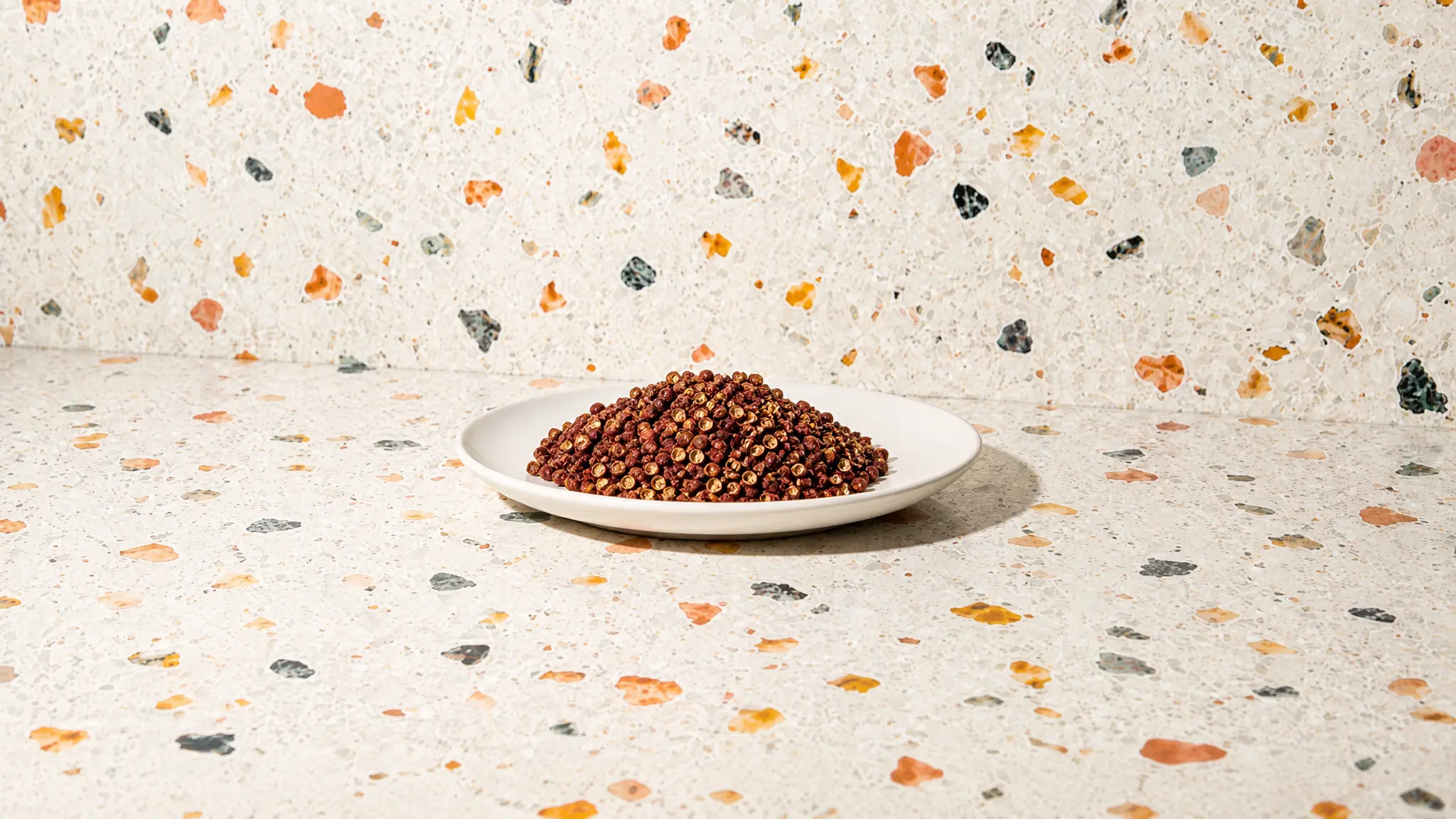
Sichuan peppercorn may be introduced from around 6 months once your baby shows signs of readiness for solid food. Use only a small amount that is finely ground and mixed into food, because Sichuan peppercorn naturally causes a tingling or numbing sensation; do not serve whole peppercorns.
- Serve Age6+months
Most babies start solids around 6 months once they show readiness signs. Match the texture and serving size to your baby's skills.
- No Allergens
Sichuan Peppercorn is not flagged as one of the major allergens tracked in this database. Still watch your baby closely when serving any new food.
- Choking Risk123451
Lower choking risk when served in the right texture. Always supervise meals and adjust the shape for your baby.
This guide is for everyday food prep questions. Ask your pediatrician about medical concerns, feeding delays, allergy plans, or serious reactions.
How Do You Serve Sichuan Peppercorn?
How to serve Sichuan Peppercorn to babies 6 months and older
- 1Offer a very tiny taste with the powdered spice mixed into a small portion—start with only a pinch on a spoon or fingertip.
- 2Ensure the peppercorns are fully ground and sifted; never serve whole peppercorns or berries and remove any hard pieces before offering.
- 3Offer only once or twice at first and wait 48–72 hours while watching closely for skin rash, diaper changes, vomiting, swelling, or breathing changes.
- 4Stop and seek medical advice immediately for hives, facial swelling, breathing difficulties, repeated vomiting, or persistent diarrhea; if no reaction, gradually increase the amount across several exposures.
How to serve Sichuan Peppercorn to babies 12 months and older
- 1Start with a very small amount of finely ground Sichuan peppercorn (a pinch in a single serving) to test tolerance and increase slowly across meals only if the child shows no discomfort.
- 2Remove any whole peppercorns or visible seeds before serving to prevent choking and sudden intense tingling or numbness.
- 3Let the child’s cues guide seasoning—stop increasing spice if they pull away, refuse the food, or show signs of prolonged mouth rubbing or distress; offer a bland food or water to soothe.
- 4Always supervise meals and aim for only mild, short-lived tingling; when unsure, use less and reintroduce gradually over several tastes.
Is Sichuan Peppercorn a Common Allergen?
Sichuan peppercorns are not among the common top‑9 allergens, but studies have identified a seed storage protein (a 2S albumin, e.g. Zan b 1) that can cause mild‑to‑severe allergic reactions in susceptible people. The spice also produces a characteristic numbing/tingling sensation in the mouth (not the same as an allergy) that can be alarming. If a child has known seed, nut, sesame, or severe food allergies, avoid Sichuan peppercorns or introduce only under medical supervision; watch for cross‑contact from processing. For infants and toddlers, consider avoiding or discussing introduction with your pediatrician or allergist first.
Is Sichuan Peppercorn a Choking Hazard?
Very Low Choking Risk
Whole Sichuan peppercorns are small, round, and very firm, so they pose a real choking risk for babies. Remove any whole peppercorns from foods and closely supervise all meals, staying within arm’s reach. Be familiar with the signs of choking and have an infant/toddler first-aid plan ready so you can act quickly if needed.
Save Sichuan Peppercorn to your food log
Track foods, reactions, and prep notes in Tummi when you want to keep your baby's feeding history in one place.
What Other Herb/Spice Can Babies Eat?
See all →

Source-Linked Guidance
See the evidence behind the guide.
Food guides show direct links to public-health guidance and research when supporting references are available. Source inclusion does not imply endorsement.
 Centers for Disease Control and Prevention
Developmental milestones, nutrition guidelines, and allergen introduction timelines.
 American Academy of Pediatrics
Evidence-based feeding recommendations from the leading pediatric authority.
 National Institutes of Health
Peer-reviewed research on infant nutrition, allergies, and food safety.