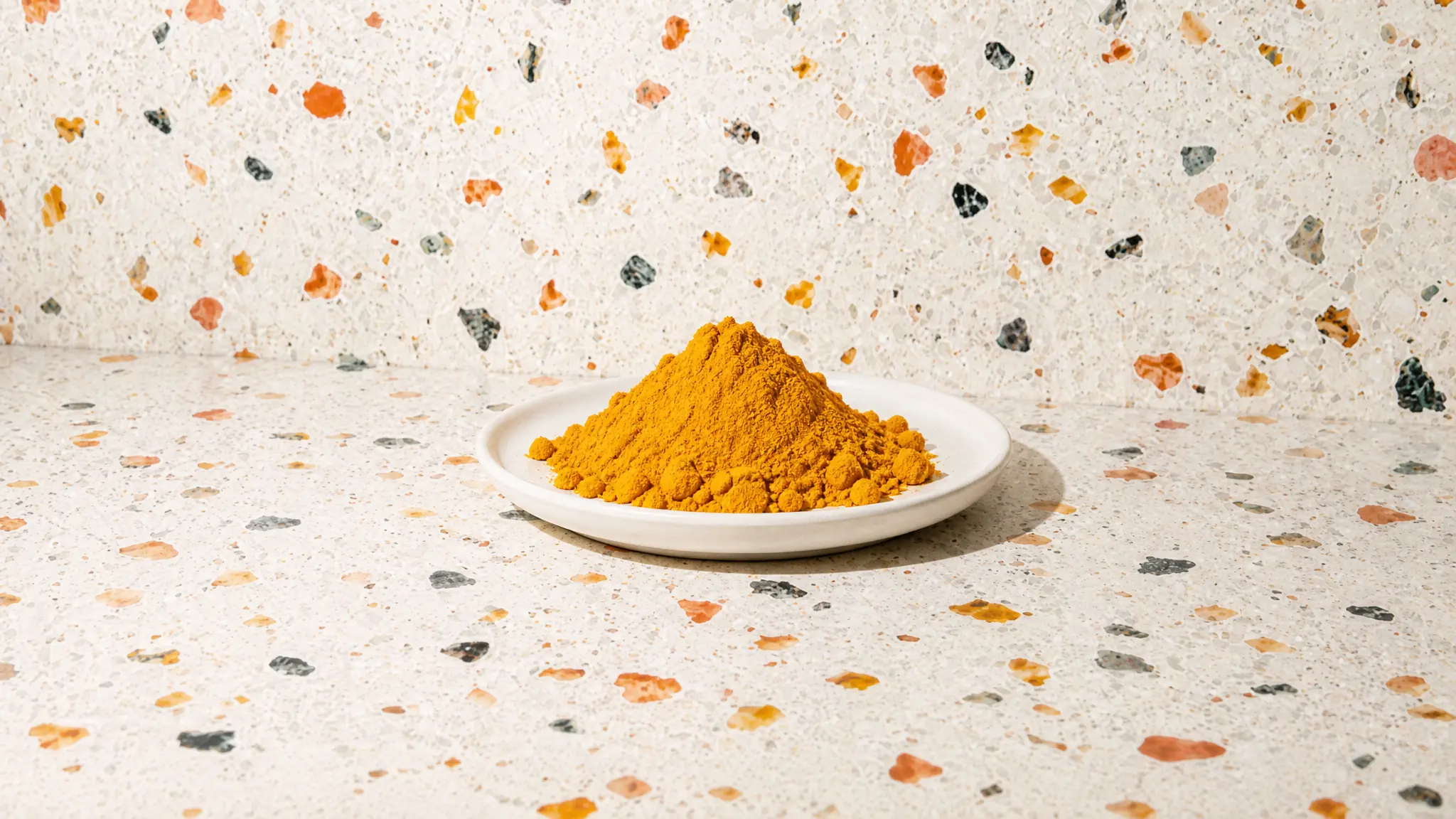
Turmeric
Herb/Spice
Last updated July 5, 2026. The Tummi Food Team maintains this Can I Feed This safety guide guide. Supporting links appear in Sources when available.



Clinically reviewed by Andria Procopio and Arefa Mohamed
Direct answer
Can babies eat Turmeric?
Yes, turmeric can be introduced around 6 months of age in small, cooked amounts as part of a diverse diet.
- Serve Age6+months
Most babies start solids around 6 months once they show readiness signs. Match the texture and serving size to your baby's skills.
- No Allergens
Turmeric is not flagged as one of the major allergens tracked in this database. Still watch your baby closely when serving any new food.
- Choking Risk123451
Lower choking risk when served in the right texture. Always supervise meals and adjust the shape for your baby.
This guide is for everyday food prep questions. Ask your pediatrician about medical concerns, feeding delays, allergy plans, or serious reactions.
How Do You Serve Turmeric?
How to serve Turmeric to babies 6 months and older
- 1Start with a very small pinch of finely ground or very finely grated turmeric and mix it into warm, cooked foods like congee, stewed lentils, or plain yogurt to lightly flavor them.
- 2Stir turmeric into soft, scoopable foods or blend it into large, very soft rice balls or tender bean or meat patties that your baby can hold and gum safely.
- 3Always cook turmeric or grate it finely—never offer raw chunks to avoid choking.
- 4Add a small amount of healthy fat (a drizzle of olive oil, butter, or ghee) to help the body absorb turmeric's nutrients.
- 5Introduce turmeric as a single new ingredient and wait 2–3 days to watch for any signs of sensitivity or allergy.
How to serve Turmeric to babies 12 months and older
- 1Season family meals with a small amount of fresh or ground turmeric; start with a pinch and increase gradually to suit taste.
- 2Add turmeric to baked items like pancakes, muffins, or quick breads by mixing a small amount into the batter and balancing flavors with mild spices (cinnamon or vanilla).
- 3Serve small, warm (not hot) sips of turmeric tea or haldi doodh in an open cup to practice drinking skills and establish a calm feeding routine.
- 4Adjust spice and sweetness to your child’s preference and avoid large amounts; use a pinch of black pepper sparingly if you want to enhance flavor and turmeric’s effect.
Is Turmeric a Common Allergen?
Turmeric is not a common food allergen but rare allergic reactions (including contact dermatitis from curcumin) have been reported. Cooking may reduce allergenicity, but spice blends or processed products can be contaminated with other allergens—always check labels. Introduce small amounts to infants cautiously and stop and seek medical advice if you see hives, swelling, breathing difficulty, or a new rash.
Is Turmeric a Choking Hazard?
Very Low Choking Risk
Turmeric in typical culinary forms (grated or powdered) poses a low choking risk for babies. However, whole uncooked chunks of turmeric can be a choking hazard, and, as with any food, an individual could choke in theory. Supervise babies closely during feeds, stay within arm’s reach, and be familiar with the signs of choking and basic first aid.
Have More Questions?
Yes. For babies around 6 months old, small amounts of turmeric can be safely introduced as part of cooked dishes or mixed into purees, but it should be used sparingly.
Yes. Because turmeric contains antioxidants and anti-inflammatory compounds, incorporating small amounts into your baby's diet can be beneficial, but always use in moderation.
Yes. Turmeric is not considered a common allergen and is generally safe for babies when introduced properly, but start with a small amount and observe any reactions.
Yes. When preparing turmeric for babies, ensure it is finely ground or cooked into dishes; in raw or large chunks, it could pose a choking hazard.
Yes. It is best to wait until your baby is over 12 months to serve turmeric in drinks like golden milk, as their digestive system is more developed at that age.
Save Turmeric to your food log
Track foods, reactions, and prep notes in Tummi when you want to keep your baby's feeding history in one place.
Sources
- Curcumin, the golden nutraceutical: multitargeting for multiple chronic diseases (Kunnumakkara AB et al., 2017) doi.org
- Potential therapeutic effects of curcumin (Aggarwal BB, Harikumar KB, 2009) doi.org
- Curcumin: A Review of Its' Effects on Human Health (Hewlings SJ, Kalman DS, 2017) doi.org
- Influence of piperine on the pharmacokinetics of curcumin (Shoba G. et al., 1998) doi.org
- Detection of plant-based adulterants in turmeric powder using DNA barcoding (Parvathy VA et al., 2015) doi.org
- Contaminated turmeric is a potential source of lead exposure for children in rural Bangladesh (Gleason K. et al., 2014) doi.org
- Toxicity of lead: A review with recent updates (Flora G., Gupta D., & Tiwari A., 2012) doi.org
- Contact urticaria from curcumin (Liddle M. et al., 2006) doi.org
- Turmeric: A condiment, cosmetic and cure (Gopinath H, Karthikeyan K., 2018) doi.org
- Uses of turmeric in dentistry: an update (Chaturvedi TP., 2009) doi.org
- New Herbal Biomedicines for the Topical Treatment of Dermatological Disorders (Hoffmann J. et al., 2020) doi.org
- Naturopathic Oncology Care for Pediatric Cancers: A Practice Survey (Psihogios A. et al., 2019) doi.org
What Other Herb/Spice Can Babies Eat?
See all →
Source-Linked Guidance
See the evidence behind the guide.
Food guides show direct links to public-health guidance and research when supporting references are available. Source inclusion does not imply endorsement.
 Centers for Disease Control and Prevention
Developmental milestones, nutrition guidelines, and allergen introduction timelines.
 American Academy of Pediatrics
Evidence-based feeding recommendations from the leading pediatric authority.
 National Institutes of Health
Peer-reviewed research on infant nutrition, allergies, and food safety.