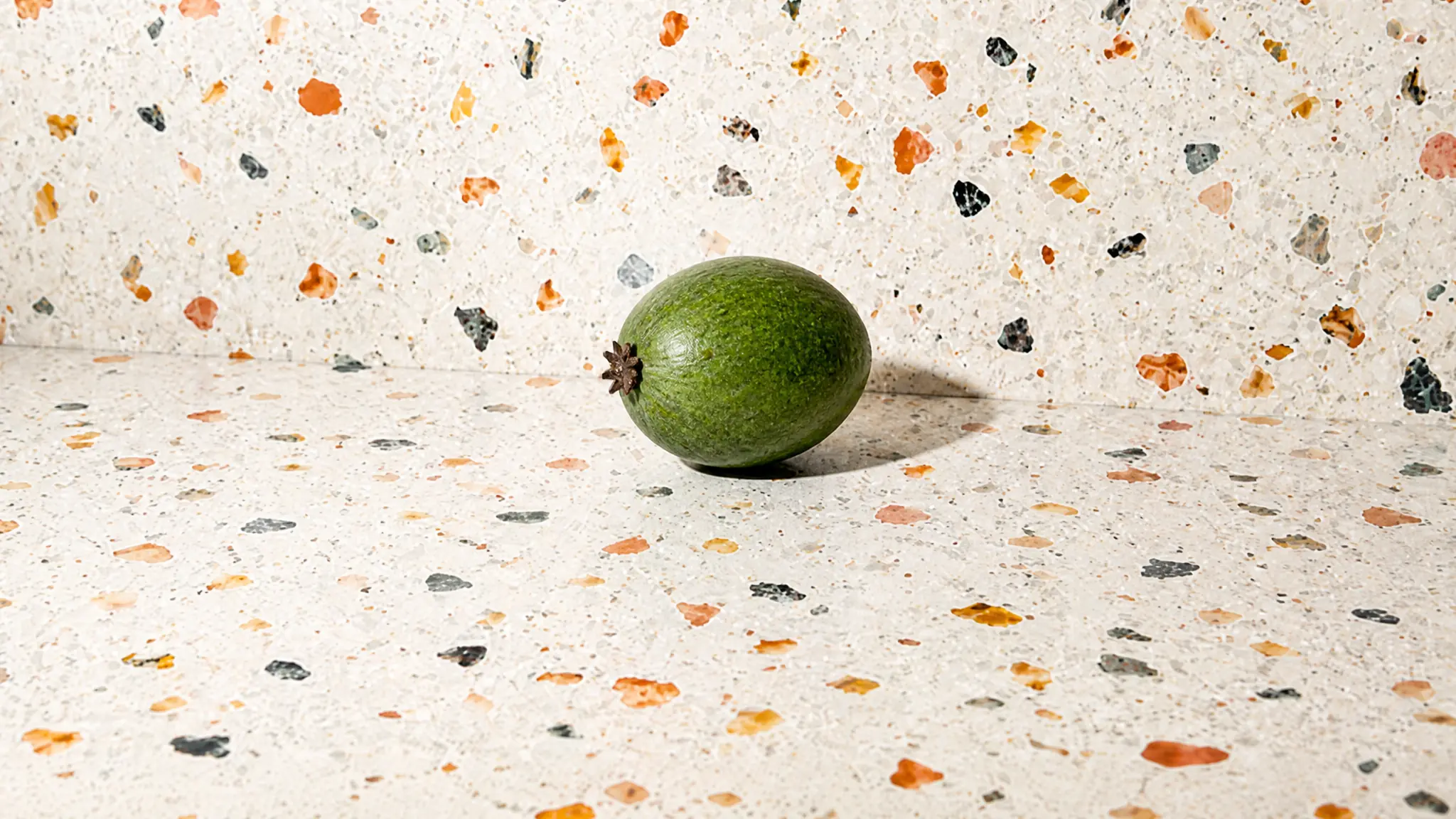
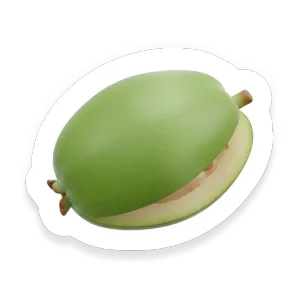
Feijoa
Fruit
Last updated July 5, 2026. The Tummi Food Team maintains this Can I Feed This safety guide guide. Supporting links appear in Sources when available.



Clinically reviewed by Andria Procopio and Arefa Mohamed
Direct answer
Can babies eat Feijoa?
Yes, babies can eat feijoa from around 6 months of age when they are ready to start solids, ensuring it is ripe and prepared in an age-appropriate way.
- Serve Age6+months
Most babies start solids around 6 months once they show readiness signs. Match the texture and serving size to your baby's skills.
- No Allergens
Feijoa is not flagged as one of the major allergens tracked in this database. Still watch your baby closely when serving any new food.
- Choking Risk123451
Lower choking risk when served in the right texture. Always supervise meals and adjust the shape for your baby.
This guide is for everyday food prep questions. Ask your pediatrician about medical concerns, feeding delays, allergy plans, or serious reactions.
How Do You Serve Feijoa?
How to serve Feijoa to babies 6 months and older
- 1Choose ripe fruit that gives slightly to gentle pressure and smells fragrant — this ensures sweeter, softer pulp.
- 2Rinse, halve and scoop out the pulp, discarding the skin before serving.
- 3Mash the pulp to a smooth, scoopable puree or stir it into porridge or yogurt; if the pulp is still firm, cook until soft by simmering briefly and then cool before serving.
- 4For larger pieces, cut into wedges or quarters so baby can access the soft flesh while you supervise, and remove any large seeds.
- 5Serve lukewarm or cool and do not add sugar or honey; always offer small spoonfuls under supervision.
How to serve Feijoa to babies 9 months and older
- 1Remove the skin and offer small, soft pieces of ripe feijoa pulp — about pea-sized or short strips — so baby can pick them up and practice a pincer grasp.
- 2Lightly roll pieces in finely ground nuts, almond flour, breadcrumbs, or shredded coconut to create a textured surface that’s easier to hold.
- 3You can also offer mashed pulp on a spoon or long quarters in the skin for them to hold; coach them to spit out any tougher skin bits and supervise closely.
- 4Always watch closely during feeding and make sure pieces are soft and appropriately sized to reduce choking risk. Avoid whole nuts—use only finely ground nut coatings or allergy-safe alternatives.
How to serve Feijoa to babies 12 months and older
- 1Wash the feijoa under running water and cut it in half lengthwise to check ripeness; the flesh should be soft and fragrant.
- 2Place halves cut-side up and pre-scoop a little pulp to make it easier; offer a small spoon or let your child use their fingers to scoop while you supervise.
- 3Always supervise; cut away any large pieces and stop if your child struggles to chew to reduce choking risk.
- 4As coordination improves, a soft, ripe feijoa can be offered to hold and nibble directly from the skin under close supervision.
Is Feijoa a Common Allergen?
Feijoa (pineapple guava) is not a common food allergen and reported reactions are rare, but published information is limited. Because feijoa is related to guava and other myrtle-family fruits, people with known guava/kiwi allergies or pollen-related oral allergy syndrome may get mouth or throat itching, swelling, or hives after eating raw fruit. For children with prior food or pollen allergies, introduce a small amount first and watch closely; seek immediate care for any breathing difficulty or systemic reaction. When in doubt, consult your pediatrician or an allergist before offering feijoa.
Is Feijoa a Choking Hazard?
Low Choking Risk
Ripe feijoa generally presents a low choking risk for babies, but any food can potentially cause choking. Stay within arm’s reach while your baby is eating and watch how they handle the texture so you can respond quickly if they gag or struggle. Familiarize yourself with choking signs and basic infant/child first-aid so you’re prepared to act if needed.
Have More Questions?
Yes. A baby can try ripe feijoa from around 6 months when developmentally ready for solids; prepare it in a soft texture suited to the baby's eating skills and supervise throughout the meal.
No, do not serve a whole feijoa to a baby. Open the fruit and offer the ripe, soft flesh in a mashed or otherwise developmentally appropriate form while supervising closely.
Yes, ripe feijoa can be offered in pieces when their softness, shape, and size match the baby's developmental eating skills. Avoid hard or large pieces and supervise throughout eating.
Prepare feijoa by opening the fruit and offering the ripe, soft flesh in a texture suited to your baby's developmental eating skills. Mash it when needed, avoid hard or large pieces, and supervise throughout eating.
Yes, untouched mashed feijoa can be refrigerated promptly in a clean, covered container for 1 to 2 days. Discard any feijoa left in the baby's serving dish after feeding; unused homemade baby food can instead be frozen in covered, dated portions.
Save Feijoa to your food log
Track foods, reactions, and prep notes in Tummi when you want to keep your baby's feeding history in one place.
Sources
- Blanco, C. (2000). The Latex Syndrome. Internet Symposium on Food Allergens, 2(3) semanticscholar.org
- Eriksson N.E. et al. (2003). Self-reported hypersensitivity to exotic fruit in birch pollen-allergic patients. Allergology International, 52:199–206. onlinelibrary.wiley.com
- American Academy of Allergy, Asthma & Immunology. Oral Allergy Syndrome (OAS) aaaai.org
- Nowak-Wegrzyn, A. (2021). Patient Education: Oral Allergy Syndrome (Beyond the Basics). UpToDate. uptodate.com
- Kids With Food Allergies — Asthma & Allergy Foundation of America kidswithfoodallergies.org
What Other Fruit Can Babies Eat?
See all →



Source-Linked Guidance
See the evidence behind the guide.
Food guides show direct links to public-health guidance and research when supporting references are available. Source inclusion does not imply endorsement.
 Centers for Disease Control and Prevention
Developmental milestones, nutrition guidelines, and allergen introduction timelines.
 American Academy of Pediatrics
Evidence-based feeding recommendations from the leading pediatric authority.
 National Institutes of Health
Peer-reviewed research on infant nutrition, allergies, and food safety.