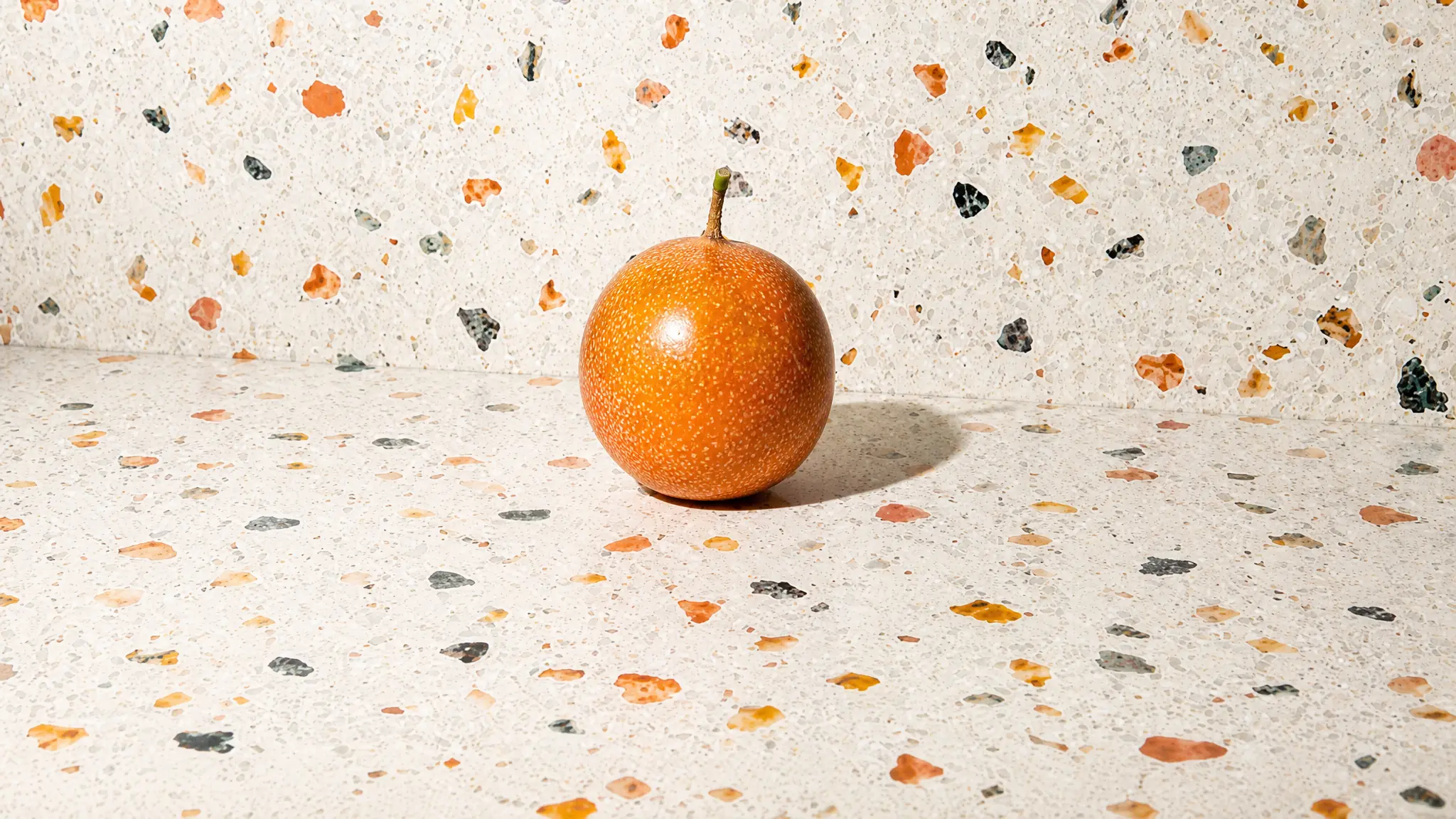
Granadilla
Fruit
Last updated July 5, 2026. The Tummi Food Team maintains this Can I Feed This safety guide guide. Supporting links appear in Sources when available.



Clinically reviewed by Andria Procopio and Arefa Mohamed
Direct answer
Can babies eat Granadilla?
Yes, ripe granadilla pulp can be introduced around 6 months, ensuring it's ripe, peeled, and served plain to avoid toxicity and skin contact.
- Serve Age6+months
Most babies start solids around 6 months once they show readiness signs. Match the texture and serving size to your baby's skills.
- No Allergens
Granadilla is not flagged as one of the major allergens tracked in this database. Still watch your baby closely when serving any new food.
- Choking Risk123451
Lower choking risk when served in the right texture. Always supervise meals and adjust the shape for your baby.
This guide is for everyday food prep questions. Ask your pediatrician about medical concerns, feeding delays, allergy plans, or serious reactions.
How Do You Serve Granadilla?
How to serve Granadilla to babies 6 months and older
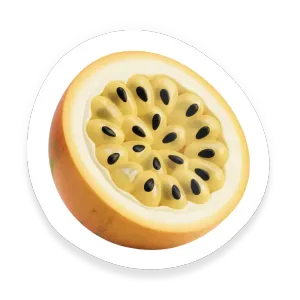
- 1Scoop the gelatinous pulp (including seeds) from a ripe granadilla and mix into warm cereal, yogurt, mashed avocado, or mashed banana so baby can self-feed or you can pre-load a spoon.
- 2For a pre-loaded spoon, combine the pulp with a thick base (yogurt, mashed banana, or avocado) so it stays on the spoon. Strain seeds only if they concern you.
- 3Always serve only ripe fruit and avoid the peel, leaves, or any unripe parts.
- 4Check the pulp’s texture and temperature — serve soft and lukewarm or at room temperature, offer small amounts, and supervise feeding; note the fruit’s acidity can irritate the skin or diaper area.
How to serve Granadilla to babies 9 months and older
- 1Offer small spoonfuls of granadilla pulp (including the seeds) mixed into yogurt, cereal, or other soft foods; start with 1–2 teaspoons to check tolerance.
- 2Never give the skin or hard shell—remove and discard it before serving.
- 3Encourage self-feeding with a spoon or let the child pick up small spoonfuls to practice. Supervise closely and keep the child seated to reduce choking risk.
- 4Watch for any signs of allergy or digestive upset for 24–48 hours after introduction; stop feeding and seek medical advice if you notice hives, vomiting, swelling, or difficulty breathing.
How to serve Granadilla to babies 18 months and older
- 1Offer granadilla halved so the child can scoop the pulp with a small spoon while you supervise to prevent large mouthfuls.
- 2Blend pulp (including edible seeds) into smoothies or mix with yogurt for a smoother texture; strain only if your child gags on the seeds. Including edible seeds helps retain fiber and nutrients.
- 3Start with a small portion (about 1–2 tablespoons) and wait a few days after first exposure to watch for any new reaction.
- 4To reduce acidity, pair granadilla with milk or yogurt and change diapers promptly after feeds; if skin redness appears, rinse the area and apply a barrier cream.
- 5Avoid adding extra sugar, serve as part of a balanced snack or meal, and always supervise mealtimes to minimize choking risk.
Is Granadilla a Common Allergen?
Granadilla (a type of passion fruit) is not a common major allergen for most children, but people with latex allergy can sometimes react (latex–fruit cross‑reactivity). The pulp and seeds are generally safe for older children, though seeds could pose a choking risk for toddlers—avoid giving whole seeds to very young children. The fruit’s acidity may irritate sensitive mouths; watch for hives, swelling, vomiting, or breathing difficulty and consult your pediatrician if concerned.
Is Granadilla a Choking Hazard?
Very Low Choking Risk
Granadilla pulp and its small seeds are not commonly a choking hazard, though any food can theoretically cause choking. The seeds and slippery pulp can trigger gagging in some early feeders, so stay within arm’s reach and watch closely while baby explores the fruit. If seeds make you uneasy, you may remove them before offering the pulp.
Have More Questions?
Yes. Granadilla pulp and seeds can usually be safely introduced to babies around 6 months, but only when the fruit is ripe to avoid toxicity and skin contact issues.
Yes. Granadilla is naturally acidic, which may cause skin rashes or diaper rash, so serve in small amounts and observe your baby's reaction.
Yes. The seeds are not a common choking hazard for babies aged 6 months and older, but removing them can reduce any concerns.
No. Granadilla is not considered a common allergen, but those with latex allergy might be sensitive, so introduce cautiously.
No. Juice should generally be avoided before age 1, but small, diluted amounts can be introduced after 1 year under supervision.
Save Granadilla to your food log
Track foods, reactions, and prep notes in Tummi when you want to keep your baby's feeding history in one place.
Sources
- Cyanogenesis of Passiflora edulis — Spencer K.C., Seigler D.S. (1983) doi.org
- Native Colombian fruits and their by-products: Phenolic profile, antioxidant activity and hypoglycaemic potential — Loizzo et al. (2019) doi.org
- "Latex-fruit syndrome": frequency of cross-reacting IgE antibodies — Brehler et al. (1997) doi.org
- Sugar in Infants, Children and Adolescents: A Position Paper — Fidler Mis et al. (2017) doi.org
- Closing America's Fiber Intake Gap: Communication Strategies — Quagliani & Felt-Gunderson (2016) doi.org
- Where We Stand: Fruit Juice — American Academy of Pediatrics (HealthyChildren.org, 2017) healthychildren.org
What Other Fruit Can Babies Eat?
See all →



Source-Linked Guidance
See the evidence behind the guide.
Food guides show direct links to public-health guidance and research when supporting references are available. Source inclusion does not imply endorsement.
 Centers for Disease Control and Prevention
Developmental milestones, nutrition guidelines, and allergen introduction timelines.
 American Academy of Pediatrics
Evidence-based feeding recommendations from the leading pediatric authority.
 National Institutes of Health
Peer-reviewed research on infant nutrition, allergies, and food safety.