
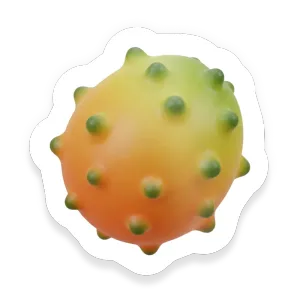
Horned Melon (Kiwano)
Fruit
Last updated July 5, 2026. The Tummi Food Team maintains this Can I Feed This safety guide guide. Supporting links appear in Sources when available.



Clinically reviewed by Andria Procopio and Arefa Mohamed
Direct answer
Can babies eat Horned Melon (Kiwano)?
Yes, babies can eat horned melon after 18 months due to its large edible seeds and potential toxicity of ornamental varieties.
- Serve Age18+months
Most babies start solids around 6 months once they show readiness signs. Match the texture and serving size to your baby's skills.
- No Allergens
Horned Melon (Kiwano) is not flagged as one of the major allergens tracked in this database. Still watch your baby closely when serving any new food.
- Choking Risk123454
Higher choking risk. Watch the prep steps closely, especially because this food can be small and round and slippery.
This guide is for everyday food prep questions. Ask your pediatrician about medical concerns, feeding delays, allergy plans, or serious reactions.
How Do You Serve Horned Melon (Kiwano)?
How to serve Horned Melon (Kiwano) to a 18-month-old baby
- 1Spoon or pour the gelatinous, seedy pulp into a small bowl for your baby to explore with fingers — let them touch and scoop at their own pace.
- 2Avoid offering whole seeds; they can be a choking hazard.
- 3If you prefer to remove seeds, work over a bowl and use clean fine-tipped tweezers or a small spoon. Seed removal can be tedious, so take your time.
- 4To make it easier to eat, mix the pulp into yogurt, ricotta, or a smooth puree—this helps blend the seeds into a softer texture.
How to serve Horned Melon (Kiwano) to a 24-month-old baby
- 1Rinse the spiky rind under running water and gently scrub to remove dirt; trim any especially sharp tips with kitchen scissors to make handling safer.
- 2Cut the melon across the middle (equator) with a sharp knife, then offer the two halves for your child to scoop the soft orange pulp with a small spoon or to sip directly like a cup.
- 3For a smoother texture, scoop the pulp (seeds are edible) and blend into smoothies or strain for a silkier puree.
- 4Spoon the pulp over yogurt, soft cheese, or shredded cooked meats for extra flavor; serve small portions and supervise while eating to reduce choking risk.
- 5Store whole horned melons in the refrigerator; once cut, keep in a sealed container and use within 2–3 days.
Is Horned Melon (Kiwano) a Common Allergen?
Horned melon (kiwano) is not a common allergen, but because it’s a Cucumis species, people who react to other melons or cucumbers may experience oral allergy symptoms (mouth/throat itching or swelling). Rare severe reactions are possible in individuals with a history of food or pollen allergies, and latex-allergic people can sometimes react to related fruits — introduce cautiously. For young children, remove or avoid the seeds as a choking hazard; if any hives, swelling, vomiting, breathing difficulty, or lip/throat tightness occur, stop feeding and seek medical care or an allergist’s advice.
Is Horned Melon (Kiwano) a Choking Hazard?
Elevated Choking Risk
Horned melon’s jelly-like interior contains many thin, flat seeds that are difficult to separate and can pose a choking hazard. Because of this, it’s best to wait until about 18 months before offering horned melon and to closely supervise your child when it’s introduced.
Have More Questions?
It depends. Horned melon can be stored in the refrigerator for up to a week, but for the best flavor and freshness, it's ideal to consume it within a few days of purchase.
It depends. Freezing horned melon puree is possible and can extend storage, but it may alter the texture, making it softer. Thaw thoroughly before serving to your baby.
It depends. Organic and conventional horned melon are both safe for babies as long as they are washed thoroughly and purchased from reputable sources.
It depends. Combining horned melon with other baby-safe fruits can provide variety and nutritional benefits, but ensure the combination is suitable for your child's age and preferences.
It depends. Typical portion sizes for babies vary, but start with small servings, like a teaspoon of puree, and adjust as your baby gets accustomed to the flavor and texture.
Save Horned Melon (Kiwano) to your food log
Track foods, reactions, and prep notes in Tummi when you want to keep your baby's feeding history in one place.
Sources
- Kiwano, Purdue University, Center for New Crops and Plant Products hort.purdue.edu
What Other Fruit Can Babies Eat?
See all →


Source-Linked Guidance
See the evidence behind the guide.
Food guides show direct links to public-health guidance and research when supporting references are available. Source inclusion does not imply endorsement.
 Centers for Disease Control and Prevention
Developmental milestones, nutrition guidelines, and allergen introduction timelines.
 American Academy of Pediatrics
Evidence-based feeding recommendations from the leading pediatric authority.
 National Institutes of Health
Peer-reviewed research on infant nutrition, allergies, and food safety.