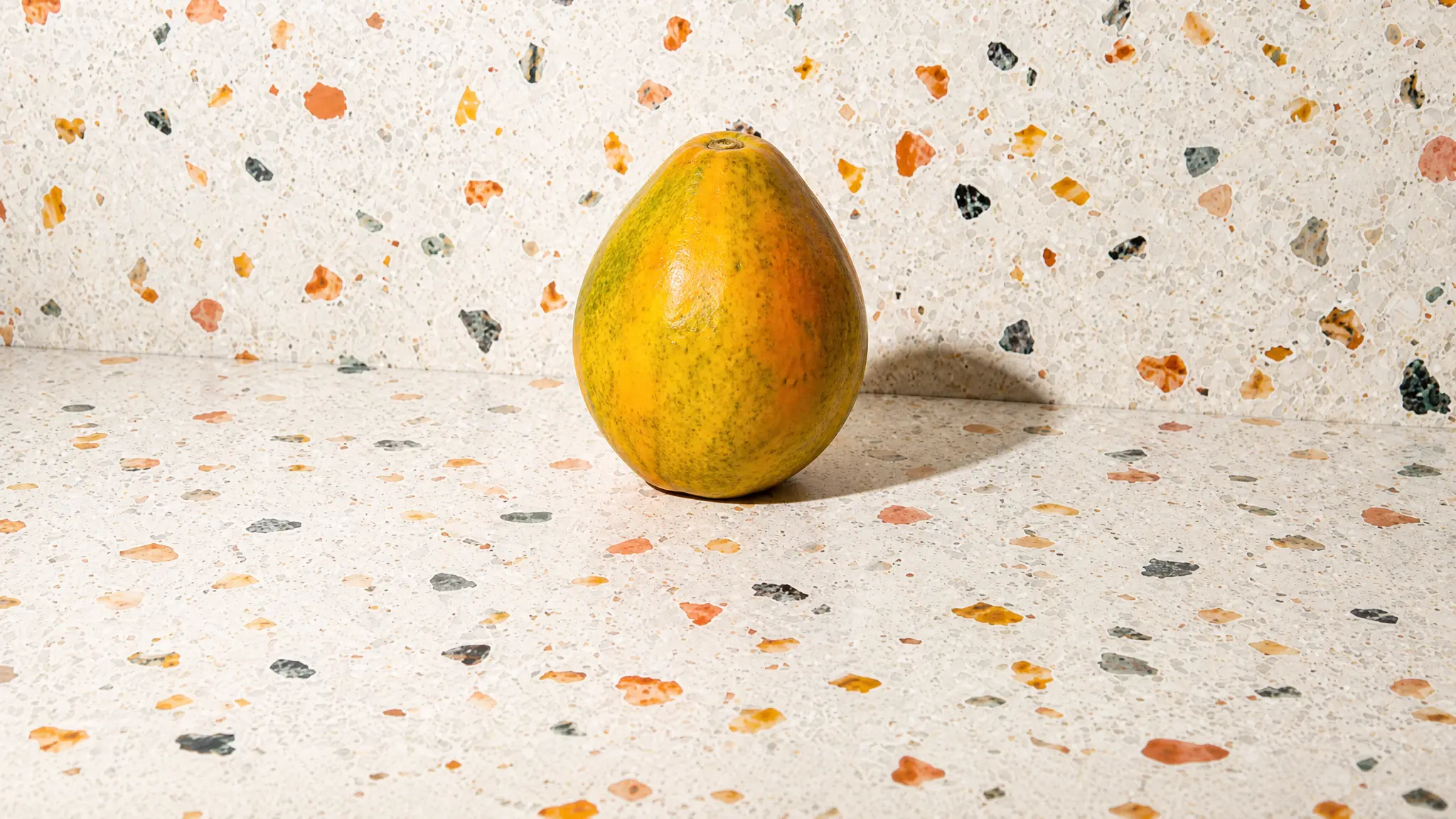
Papaya
Fruit
Last updated July 5, 2026. The Tummi Food Team maintains this Can I Feed This safety guide guide. Supporting links appear in Sources when available.



Clinically reviewed by Andria Procopio and Arefa Mohamed
Direct answer
Can babies eat Papaya?
Yes, babies can eat papaya starting around 6 months old when they are ready to start solids, provided it is pureed or well soft-cooked.
- Serve Age6+months
Most babies start solids around 6 months once they show readiness signs. Match the texture and serving size to your baby's skills.
- No Allergens
Papaya is not flagged as one of the major allergens tracked in this database. Still watch your baby closely when serving any new food.
- Choking Risk123451
Lower choking risk when served in the right texture. Always supervise meals and adjust the shape for your baby.
This guide is for everyday food prep questions. Ask your pediatrician about medical concerns, feeding delays, allergy plans, or serious reactions.
How Do You Serve Papaya?
How to serve Papaya to babies 6 months and older
- 1Remove skin and seeds and cut the papaya into large wedges or crescent-shaped pieces for easy grasping.
- 2Choose ripe fruit that is soft enough to mash between your thumb and forefinger so pieces break down easily in the mouth.
- 3Serve whole crescents for hand-to-mouth exploration or mash/chop the fruit for spoon-feeding.
- 4Mix mashed papaya into warm cereal, chia pudding, overnight oats, or yogurt to add flavor and moisture.
- 5If pieces are too slippery to hold, sprinkle with hemp seeds, dry infant cereal, shredded coconut, or finely ground nuts/seeds for added grip and texture; always supervise while eating.
How to serve Papaya to babies 9 months and older
- 1Choose a ripe papaya that gives slightly to gentle pressure and smells sweet.
- 2Peel and remove all seeds, then cut into bite-sized pieces. Test each piece — compress when gently pressed to confirm safe softness.
- 3If pieces are small and slippery, lightly coat them in hemp seeds, dry infant cereal, shredded coconut, or finely ground nuts/seeds to add grip and texture.
- 4If your baby struggles to pick up small pieces, offer larger crescents or wedges they can hold and gnaw while continuing to present smaller pieces for practice.
- 5Serve at room temperature, supervise every bite, and store prepared papaya in an airtight container in the fridge for up to 48 hours.
How to serve Papaya to babies 12 months and older
- 1Choose a fully ripe papaya (yellow skin and soft flesh); peel, scoop out seeds, and cut into small, easily grasped pieces about the size of a grape.
- 2Serve pieces plain on a small plate or tray; present a fork to introduce utensils but expect fingers to be used while skills develop.
- 3Cut pieces so they are squishable—press with a fork to test ripeness. Small and soft pieces reduce choking risk.
- 4Remove any tough skin or strings, supervise every bite, and allow a mix of finger-feeding and utensil practice so your child can build confidence.
Is Papaya a Common Allergen?
Papaya is not one of the common top allergens, but it can cause reactions in some people. Those with natural rubber latex allergy may have cross‑reactivity (latex‑fruit syndrome) and be at higher risk; the enzyme papain in raw papaya can also irritate the mouth or skin. Introduce papaya in small amounts and watch for hives, facial swelling, vomiting, or breathing difficulty. Seek immediate medical care for any signs of anaphylaxis.
Is Papaya a Choking Hazard?
Low Choking Risk
Underripe or green papaya can be firm and slippery, which increases the risk of gagging or airway blockage; even ripe fruit can be slippery. Always stay within an arm’s reach during meals so you can intervene quickly if needed. Know the signs of choking versus gagging and have infant choking first-aid skills ready.
Have More Questions?
It depends. Whole papaya can be stored in the refrigerator for up to 2-3 days, but it's best to refrigerate cut pieces in an airtight container to maintain freshness for your baby's safety and taste.
It depends. Freezing pureed papaya is possible and can extend its shelf life, usually up to 3 months; ensure it is stored in an airtight container or freezer bag for best quality.
Yes. Organic papaya is generally grown without synthetic pesticides and fertilizers, which some parents prefer for their baby's health, but conventional papaya is also safe to feed if thoroughly washed.
It depends. Combining papaya with other fruits or vegetables can introduce variety and new flavors to your baby’s diet, but start with single-ingredient foods to monitor for reactions.
It depends. Portion sizes should be appropriate for your baby's age and appetite; start with a few teaspoons and increase as tolerated, ensuring they do not swallow large pieces.
Save Papaya to your food log
Track foods, reactions, and prep notes in Tummi when you want to keep your baby's feeding history in one place.
Sources
- Nutraceutical Potential of Carica papaya in Metabolic Syndrome mdpi.com
- Drugs and Lactation Database (LactMed) - NCBI Bookshelf ncbi.nlm.nih.gov
- Papain Induced Occupational Asthma with Kiwi and Fig Allergy (Allergy Asthma Immunol Res., 2016) pmc.ncbi.nlm.nih.gov
What Other Fruit Can Babies Eat?
See all →


Source-Linked Guidance
See the evidence behind the guide.
Food guides show direct links to public-health guidance and research when supporting references are available. Source inclusion does not imply endorsement.
 Centers for Disease Control and Prevention
Developmental milestones, nutrition guidelines, and allergen introduction timelines.
 American Academy of Pediatrics
Evidence-based feeding recommendations from the leading pediatric authority.
 National Institutes of Health
Peer-reviewed research on infant nutrition, allergies, and food safety.