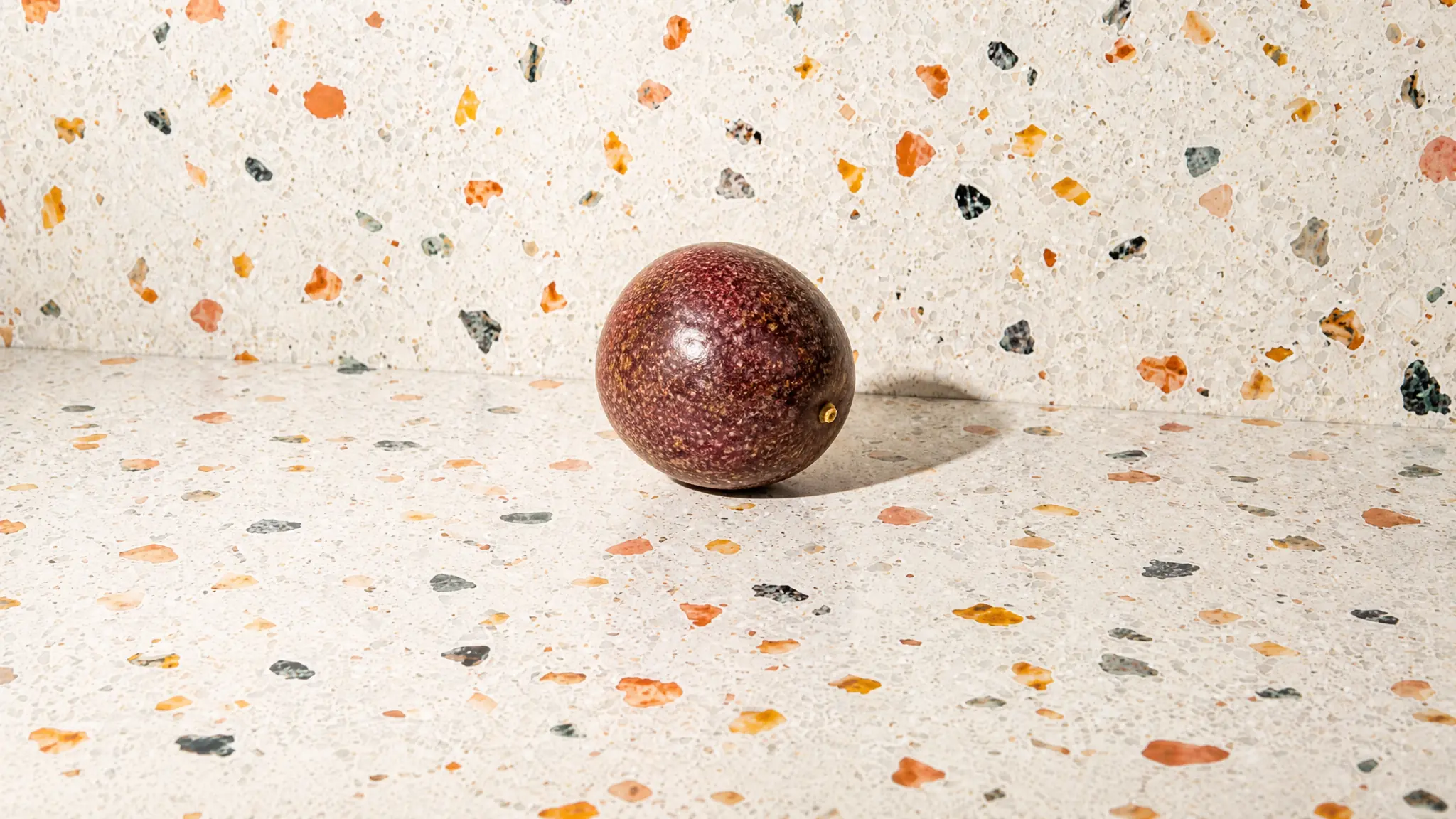
Passion Fruit
Fruit
Last updated July 5, 2026. The Tummi Food Team maintains this Can I Feed This safety guide guide. Supporting links appear in Sources when available.



Clinically reviewed by Andria Procopio and Arefa Mohamed
Direct answer
Can babies eat Passion Fruit?
Yes, babies can eat ripe passion fruit pulp and seeds starting around 6 months, once they are ready to begin solids.
- Serve Age6+months
Most babies start solids around 6 months once they show readiness signs. Match the texture and serving size to your baby's skills.
- No Allergens
Passion Fruit is not flagged as one of the major allergens tracked in this database. Still watch your baby closely when serving any new food.
- Choking Risk123451
Lower choking risk when served in the right texture. Always supervise meals and adjust the shape for your baby.
This guide is for everyday food prep questions. Ask your pediatrician about medical concerns, feeding delays, allergy plans, or serious reactions.
How Do You Serve Passion Fruit?
How to serve Passion Fruit to a 9-month-old baby
- 1Scoop the gelatinous pulp and seeds from a ripe passion fruit into a bowl and discard the bitter pith, peel, and shell.
- 2Stir the pulp into warm cooked cereal or plain thick Greek‑style yogurt to make a soft, scoopable mix. Check temperature before offering.
- 3For spoon practice, mix the pulp with a clingy food like ricotta or very thick yogurt, preload the spoon, and let your baby practice self-feeding while you closely supervise.
- 4If the seeds or texture worry you, mash the pulp slightly or press it through a sieve to soften; always offer small spoonfuls and stay close to watch for gagging.
How to serve Passion Fruit to a 18-month-old baby
- 1Mix a small spoonful of ripe passion fruit pulp (including seeds) into yogurt, warm cereal, or mashed fruit to introduce the tart flavor gradually.
- 2Serve alongside or mix with protein-rich foods like yogurt, cottage cheese, or nut butters to balance acidity and increase fullness.
- 3Start with ½–1 teaspoon and increase slowly, watching how your child tolerates the taste and texture.
- 4Reduce or stop servings if you notice stomach upset, diaper rash, or fussiness, and consult your pediatrician if symptoms persist.
How to serve Passion Fruit to a 24-month-old baby
- 1Blend 1–2 tablespoons of passion-fruit pulp (seeds optional) into yogurt, banana, or milk to mellow the tartness and add creaminess.
- 2For smoothies, dilute with breastmilk, formula, or water to avoid upsetting the stomach. Keep servings small (about 2–4 tablespoons per serving).
- 3If serving pulp alone, pair it with a protein such as plain full‑fat yogurt or mashed avocado to buffer the acid and reduce the chance of diaper rash.
- 4Use frozen unsweetened passion‑fruit puree when fresh isn’t available—thaw and stir before using—and watch for any signs of sensitivity (rash, loose stools) after first exposures.
Is Passion Fruit a Common Allergen?
Passion fruit is not a common allergen for most children, but it can trigger reactions in sensitized individuals—especially people with latex allergy due to latex–fruit cross-reactivity. Typical reactions include oral allergy syndrome (itching/tingling or mild swelling of the mouth/throat), skin symptoms, and rarely more severe systemic reactions; avoid and seek urgent care for breathing or swallowing problems. If your child has a known latex allergy, introduce passion fruit cautiously and consider discussing testing with an allergist.
Is Passion Fruit a Choking Hazard?
Very Low Choking Risk
Passion fruit pulp and seeds are not commonly a choking hazard for babies, though any food can pose a risk for an individual child. Stay within arm’s reach and watch for coughing or gagging during feedings. If your baby has known swallowing difficulties or struggles with textured foods, consult your pediatrician or feeding specialist.
Have More Questions?
Yes—when fully ripe. Ripe passion fruit has wrinkled skin and a fragrant aroma. The pulp and seeds can be safely introduced to babies from around 6 months old, ensuring the fruit is ripe and properly prepared.
It depends. Only the pulp of ripe passion fruit should be given to babies, and it must be prepared to avoid toxicity from unripe fruit, leaves, peel, or skin. Always ensure the fruit is ripe and clean before offering.
It depends. The seeds are edible and a good source of fiber, but some parents prefer to remove them to reduce choking concerns. If served with seeds, ensure they are soft and appropriately prepared.
Yes—particularly if stored in the fridge for a few days or in the freezer for longer periods. Keep in an airtight container, and check for spoilage or off smells before serving.
It depends. Start with small portions, about a teaspoon or so, and observe your baby's response. Gradually increase the amount as tolerated, keeping in mind it should be part of a balanced diet.
Save Passion Fruit to your food log
Track foods, reactions, and prep notes in Tummi when you want to keep your baby's feeding history in one place.
Sources
- Cyanogenesis of Passiflora edulis — Journal of Agricultural and Food Chemistry (1983) doi.org
- Antioxidant potential and physicochemical characterization of yellow, purple and orange passion fruit — Journal of Food Science and Technology (2018) doi.org
- Fruit Juice in Infants, Children, and Adolescents: Current Recommendations — Pediatrics (2017) doi.org
- Sugar in Infants, Children and Adolescents: A Position Paper — Journal of Pediatric Gastroenterology and Nutrition (2017) doi.org
- "Latex-fruit syndrome": frequency of cross-reacting IgE antibodies — Allergy (1997) doi.org
- Contact urticaria and its mechanisms — Food and Chemical Toxicology (1994) doi.org
- Contact reactions to food — Current Allergy and Asthma Reports (2008) doi.org
What Other Fruit Can Babies Eat?
See all →



Source-Linked Guidance
See the evidence behind the guide.
Food guides show direct links to public-health guidance and research when supporting references are available. Source inclusion does not imply endorsement.
 Centers for Disease Control and Prevention
Developmental milestones, nutrition guidelines, and allergen introduction timelines.
 American Academy of Pediatrics
Evidence-based feeding recommendations from the leading pediatric authority.
 National Institutes of Health
Peer-reviewed research on infant nutrition, allergies, and food safety.