
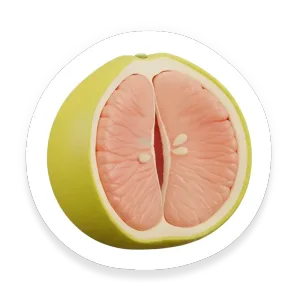
Pomelo
Fruit
Last updated July 5, 2026. The Tummi Food Team maintains this Can I Feed This safety guide guide. Supporting links appear in Sources when available.



Clinically reviewed by Andria Procopio and Arefa Mohamed
Direct answer
Can babies eat Pomelo?
Yes, babies can have pomelo at 6 months or older, when they start solids; introduce small, peeled, and seedless segments carefully.
- Serve Age6+months
Most babies start solids around 6 months once they show readiness signs. Match the texture and serving size to your baby's skills.
- No Allergens
Pomelo is not flagged as one of the major allergens tracked in this database. Still watch your baby closely when serving any new food.
- Choking Risk123452
Lower choking risk when served in the right texture. Always supervise meals and adjust the shape for your baby.
This guide is for everyday food prep questions. Ask your pediatrician about medical concerns, feeding delays, allergy plans, or serious reactions.
How Do You Serve Pomelo?
How to serve Pomelo to babies 6 months and older
- 1Cut the pomelo into large, thin wedges and remove the rind, pith, inner membrane, and any seeds before serving.
- 2Offer a single wedge sized for the baby to grasp so they can self-feed while you stay within arm's reach.
- 3Let the baby chew and work food out of their own mouth if they bite off a big piece. Do not stick fingers into their mouth to dislodge food.
- 4Start with a small amount and watch closely for choking or allergic reactions.
- 5If the child is on medication, check with your pediatrician or pharmacist first because pomelo can interact with some drugs.
How to serve Pomelo to babies 9 months and older
- 1Cut into thin, bite-sized pieces or very thin crescent slices—remove all membranes and seeds to make it easy to pick up and swallow.
- 2Peel away the thick pith and separate segments; then trim off the translucent membrane so only tender flesh remains for safer self-feeding.
- 3Offer small portions and supervise every bite—stay within arm’s reach and remove any pieces that are too large or stringy.
- 4Start with a tiny amount and watch for skin or digestive reactions, since citrus can cause irritation; stop and consult your pediatrician if you notice redness or repeated upset.
- 5Avoid serving whole wedges or tough membranes; if mixing with other foods, combine with softer textures (e.g., mashed banana or yogurt) to lower choking risk.
How to serve Pomelo to babies 12 months and older
- 1Remove the tough membrane and any seeds, then offer bite-sized pieces or thin slices so the fruit is easy to chew and not slippery.
- 2Introduce a child-friendly utensil (spoon or fork) for practice while you supervise every bite.
- 3Keep portions small and rinse skin/clothes if juice spills. Acidic juice can irritate skin and may worsen diaper rash.
- 4If the child is taking prescription medications, check with your pediatric clinician or pharmacist before serving — pomelo can affect how some drugs are metabolized (similar to grapefruit).
Is Pomelo a Common Allergen?
Pomelo is a citrus fruit and not one of the common major food allergens, but citrus can cause allergic reactions in some people. Reactions are most often oral allergy syndrome (tingling, itching, or swelling of the lips, mouth, or throat), hives, or contact dermatitis from the peel; pollen‑allergic people may experience cross‑reactivity. The peel oils can irritate skin and occasionally cause photodermatitis in sensitive individuals. If a child has hives, swelling, breathing difficulty, or throat tightness after exposure, seek medical care promptly.
Is Pomelo a Choking Hazard?
Low Choking Risk
Pomelo segments left in their membranes and whole seeds are choking and aspiration hazards for babies, as the pieces can block the airway or be inhaled. Always stay within arm’s reach and closely supervise any baby eating citrus, since coughing or gagging can quickly become an emergency. Caregivers should know basic infant choking first aid and be prepared to respond.
Have More Questions?
Yes. Once babies are ready for solids, around 6 months, pomelo can be introduced in small, manageable pieces, but watch out for citrus rinds and seeds to prevent choking.
Yes. Pomelo is healthy for babies and provides essential nutrients like vitamin C, potassium, and fiber to support their growth, immune system, and digestion.
No. Pomelo is not a common allergen, but some children with pollen sensitivities may experience oral allergy syndrome or skin reactions. Always monitor for reactions when first introduced.
Yes. Citrus segments and seeds of pomelo pose choking and aspiration risks for babies, so prepare the fruit by removing membranes, seeds, and cutting into small pieces.
After 12 months, small amounts of pomelo juice can be given as an occasional treat. It's best to wait until age 2 for regular or larger servings to avoid excessive sugar intake.
Save Pomelo to your food log
Track foods, reactions, and prep notes in Tummi when you want to keep your baby's feeding history in one place.
Sources
- Bailey DG, Dresser G, Arnold JM. Grapefruit-medication interactions: forbidden fruit or avoidable consequences? CMAJ. 2013. doi.org
- U.S. Food & Drug Administration. Grapefruit juice and some drugs don’t mix. (2021). fda.gov
- Tocmo R, Pena-Fronteras J, Calumba KF, Mendoza M, Johnson JJ. Valorization of pomelo peel. Compr Rev Food Sci Food Saf. 2020. doi.org
- American Academy of Allergy Asthma & Immunology. Oral Allergy Syndrome (OAS) or Pollen Fruit Syndrome (PFS). aaaai.org
- Iorio RA et al. Citrus allergy from pollen to clinical symptoms. PLoS ONE. 2013. doi.org
- American Academy of Pediatrics: HealthyChildren.org. Where We Stand: Fruit Juice. (2017). healthychildren.org
- Fidler Mis et al. Sugar in Infants, Children and Adolescents: A Position Paper of ESPGHAN. Journal of Pediatric Gastroenterology and Nutrition. 2017. doi.org
What Other Fruit Can Babies Eat?
See all →




Source-Linked Guidance
See the evidence behind the guide.
Food guides show direct links to public-health guidance and research when supporting references are available. Source inclusion does not imply endorsement.
 Centers for Disease Control and Prevention
Developmental milestones, nutrition guidelines, and allergen introduction timelines.
 American Academy of Pediatrics
Evidence-based feeding recommendations from the leading pediatric authority.
 National Institutes of Health
Peer-reviewed research on infant nutrition, allergies, and food safety.