
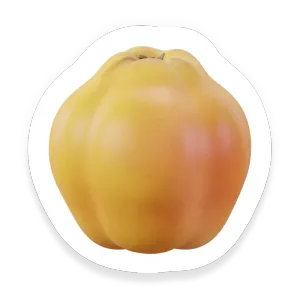
Quince
Fruit
Last updated July 5, 2026. The Tummi Food Team maintains this Can I Feed This safety guide guide. Supporting links appear in Sources when available.



Clinically reviewed by Andria Procopio and Arefa Mohamed
Direct answer
Can babies eat Quince?
Yes, cooked quince can be introduced around 6 months, after removing seeds and softening the fruit for easy baby handling.
- Serve Age6+months
Most babies start solids around 6 months once they show readiness signs. Match the texture and serving size to your baby's skills.
- No Allergens
Quince is not flagged as one of the major allergens tracked in this database. Still watch your baby closely when serving any new food.
- Choking Risk123453
Some choking risk. Use the prep section to change the size, shape, or texture before serving.
This guide is for everyday food prep questions. Ask your pediatrician about medical concerns, feeding delays, allergy plans, or serious reactions.
How Do You Serve Quince?
How to serve Quince to babies 6 months and older
- 1Peel if the skin seems tough, remove all seeds and the core, and cut into large halves or wedges for cooking.
- 2Cook by simmering, baking, or steaming until the flesh is very soft (about 15–30 minutes depending on size).
- 3Offer large, well-cooked halves or slices for your child to hold and gum; if they struggle with pieces, mash or puree the cooked quince and stir into porridge or yogurt.
- 4Avoid quince jams or jellies because of added sugar — serve plain cooked fruit only.
How to serve Quince to babies 9 months and older
- 1Peel, core and remove all seeds before cooking.
- 2Cook quince until very soft — simmer, steam or bake until easily mashed (timing varies by size).
- 3Match the texture to your baby’s skills: mash or puree for early feeders, or cut into small, soft bite-sized pieces for those who can pick up and chew.
- 4Serve plain or mixed into unsweetened yogurt or cereal; skip jams, jellies and added sugar.
- 5Always supervise feedings and watch closely for choking or any allergic reactions.
How to serve Quince to babies 12 months and older
- 1Cook quince until very soft, then cut into small, bite-sized pieces and remove all seeds, core, and any tough skin.
- 2Serve pieces on a small plate and place a child-safe fork within reach or preload it so your child can practice grabbing and using utensils.
- 3Offer mashed or pureed quince mixed into porridge, yogurt, or savory dishes if a softer texture is preferred.
- 4Avoid sweetened quince preserves and syrups; choose plain cooked quince instead to limit added sugar.
Is Quince a Common Allergen?
Quince is not a common food allergen for most children, but raw quince can trigger oral allergy syndrome (itchy mouth/throat) in people with birch‑pollen sensitivity. The seeds contain cyanogenic compounds and aren’t meant to be eaten whole. Processed quince products (pastes/compotes) may contain added sulfites or additives—always check labels if your child is sulfite‑sensitive. If your child has pollen allergies or a history of sulfite reactions, consult your pediatrician before offering quince.
Is Quince a Choking Hazard?
Moderate Choking Risk
Quince can be a choking hazard when raw because most varieties are very firm — remove the seeds and cook the fruit until it’s very soft to reduce risk. The skin can be tough and difficult to chew, so peel it if your baby struggles with pieces. Always stay within arm’s reach during meals and create a safe eating environment so you can quickly intervene if needed.
Have More Questions?
Yes, cooked quince can be introduced to babies around 6 months old. Ensure the fruit is cooked until soft and seed-free before serving.
Yes, quince is non-allergenic for most babies, though individual sensitivities can occur. Always offer a small amount first and monitor for any reactions.
It depends on the preparation. Fresh raw quince is very firm and not suitable for babies; it must be cooked until soft to ensure safety and digestibility.
Yes, for babies, it's best to start with small portions of pureed cooked quince. As they grow, you can graduallyincrease the texture.
Yes, quince can be stored in the refrigerator for up to 48 hours once prepared and should be refrigerated promptly to ensure safety.
Save Quince to your food log
Track foods, reactions, and prep notes in Tummi when you want to keep your baby's feeding history in one place.
Sources
- Fattouch S et al. (2007). Antimicrobial activity of Tunisian quince (Cydonia oblonga Miller) pulp and peel polyphenolic extracts. J Agric Food Chem. doi.org
- Noubarani M et al. (2020). Protective Effects of Cydonia oblonga Mill. Fruit on Carbon Tetrachloride-induced Hepatotoxicity. Iran J Pharm Res. doi.org
- Panche AN et al. (2016). Flavonoids: an overview. Journal of Nutritional Science. doi.org
- Antolín-Amérigo D et al. (2015). Allergy to quince. Allergologia et immunopathologia. doi.org
- Rodríguez J et al. (2000). Clinical cross-reactivity among foods of the Rosaceae family. J Allergy Clin Immunol. doi.org
- Muluk NB & Cingi C. (2018). Oral allergy syndrome. American Journal of Rhinology & Allergy. doi.org
- Thomas M et al. (2000). Dietary fibre and cell-wall polysaccharides in the fruits of Japanese quince. LWT - Food Science and Technology. doi.org
What Other Fruit Can Babies Eat?
See all →







Source-Linked Guidance
See the evidence behind the guide.
Food guides show direct links to public-health guidance and research when supporting references are available. Source inclusion does not imply endorsement.
 Centers for Disease Control and Prevention
Developmental milestones, nutrition guidelines, and allergen introduction timelines.
 American Academy of Pediatrics
Evidence-based feeding recommendations from the leading pediatric authority.
 National Institutes of Health
Peer-reviewed research on infant nutrition, allergies, and food safety.