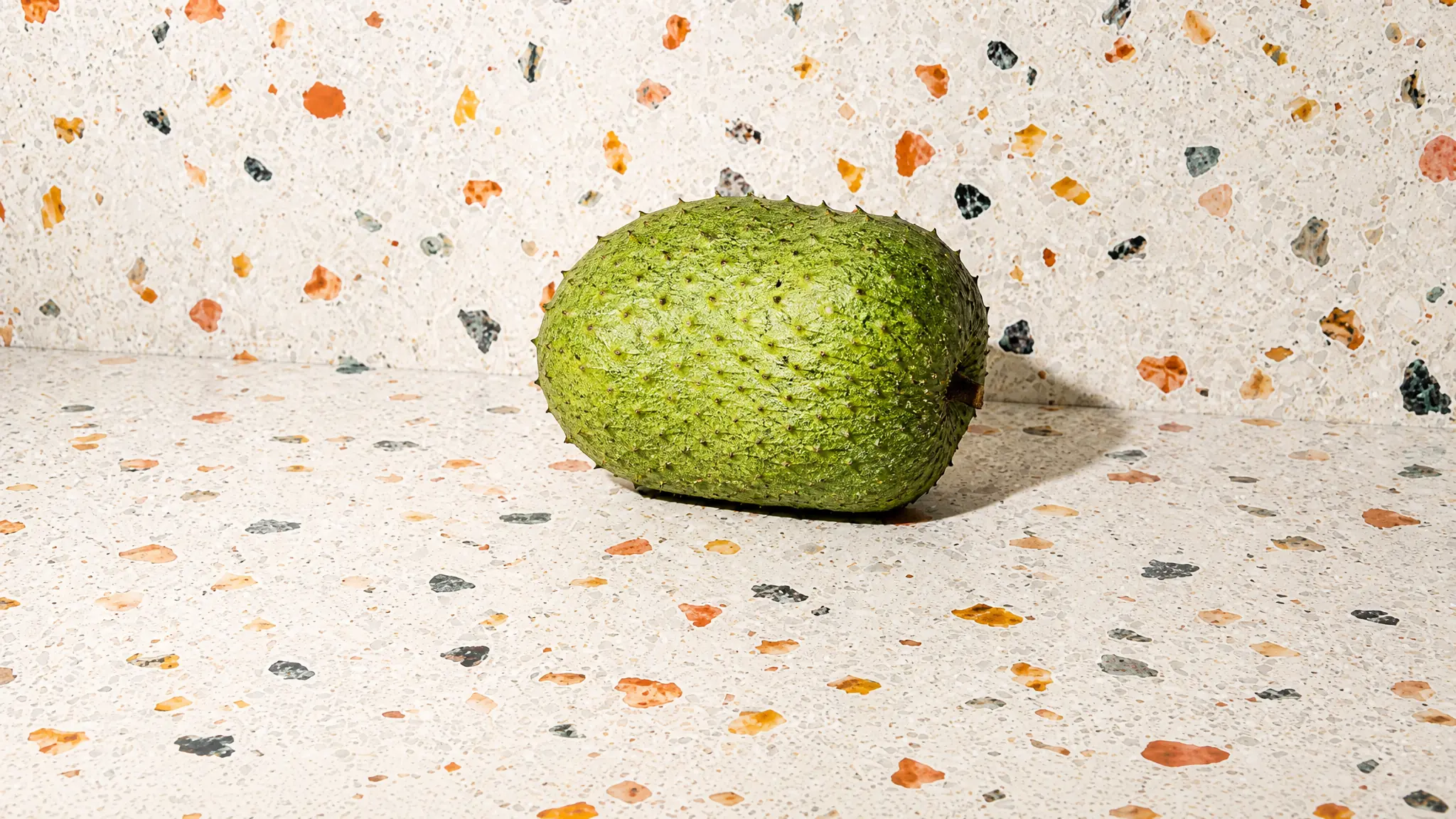
Soursop (Guanábana)
Fruit
Last updated July 5, 2026. The Tummi Food Team maintains this Can I Feed This safety guide guide. Supporting links appear in Sources when available.



Clinically reviewed by Andria Procopio and Arefa Mohamed
Direct answer
Can babies eat Soursop (Guanábana)?
Yes, babies can eat soursop from around 6 months, once all seeds and skin are removed, as it is safe and nutritious at that age.
- Serve Age6+months
Most babies start solids around 6 months once they show readiness signs. Match the texture and serving size to your baby's skills.
- No Allergens
Soursop (Guanábana) is not flagged as one of the major allergens tracked in this database. Still watch your baby closely when serving any new food.
- Choking Risk123455
Higher choking risk. Watch the prep steps closely, especially because this food can be small and round, hard, and slippery.
This guide is for everyday food prep questions. Ask your pediatrician about medical concerns, feeding delays, allergy plans, or serious reactions.
How Do You Serve Soursop (Guanábana)?
How to serve Soursop (Guanábana) to babies 6 months and older
- 1Choose ripe soursop (yields slightly under gentle pressure) and cut it open; remove all skin, the central core, and every seed — inspect the flesh carefully for deeply embedded seeds.
- 2Serve a large spoonful or section of the de-seeded pulp that is soft and easy to gum; double-check for any small seed fragments before offering.
- 3Mash or finely chop the de-seeded pulp and mix into plain yogurt or mashed vegetables to create a scoopable, easy-to-handle texture. Smooth, lump-free mixtures are simplest for little mouths.
- 4Avoid offering concentrated liquids like smoothies or regular juice as the main serving because they reduce fiber and add extra sugars; an occasional tiny taste is fine.
How to serve Soursop (Guanábana) to babies 9 months and older
- 1Peel, remove the core, and pick out all seeds; cut the flesh into small, bite-sized pieces or mash as needed.
- 2Use ripe fruit and make sure pieces are soft and easily mashable between your fingers, with no hard or stringy bits.
- 3Offer while the baby is seated and supervised, keeping food within reach but avoiding walking or playing with pieces to reduce choking risk.
- 4Avoid regular smoothies and juice for now—allow only occasional tastes—and continue offering mashed or larger de-seeded sections if preferred.
How to serve Soursop (Guanábana): varies
- 1Cut a small, manageable wedge of soursop and place it on a plate for the child to handle.
- 2Demonstrate scraping the soft flesh with a spoon or your thumb so the child sees how to separate flesh from seeds.
- 3Let the child try scraping and tasting while you supervise; coach them to chew thoroughly and to spit seeds into a cup or bowl until they do it reliably.
- 4Remind them do not eat the skin and discard seeds safely; stop and wait to try again later if the child struggles with chewing or spitting.
Is Soursop (Guanábana) a Common Allergen?
Soursop (guanábana) is not a common food allergen and allergic reactions are rare. However, people with known fruit allergies or latex allergy can sometimes react to tropical fruits, so introduce small amounts and watch for hives, swelling, vomiting, or breathing changes. Remove and discard seeds (toxic) and avoid leaf/seed teas for young children or pregnant women. If your child has a history of severe allergies, consult your pediatrician before offering soursop.
Is Soursop (Guanábana) a Choking Hazard?
High Choking Risk
Soursop flesh is soft and usually not a choking hazard, but the large, inedible seeds embedded in the fruit are the primary risk because they can be hard to spot and may block a young child’s airway. Carefully check for and remove all seeds and stay within arm’s reach while baby explores the fruit. Avoid offering pieces that still contain seeds or skin, as these increase choking risk.
Have More Questions?
Yes, soursop can be stored in the refrigerator for a few days or frozen for longer preservation, provided all skin and seeds are removed beforehand.
Yes, you can freeze pureed soursop in ice cube trays for convenient serving portions once prepared, making it easy to portion for your baby.
Yes, choosing organic soursop may reduce pesticide exposure, but both organic and conventional soursop are safe for babies if prepared properly.
Yes, you can combine soursop with other soft fruits or vegetables to introduce new flavors to your baby, ensuring all are prepared safely and served in age-appropriate textures.
Portion sizes vary, but starting with small, manageable amounts and gradually increasing as your baby shows acceptance is recommended; around 1-2 ounces is a typical initial serving.
Save Soursop (Guanábana) to your food log
Track foods, reactions, and prep notes in Tummi when you want to keep your baby's feeding history in one place.
Sources
- Soursop seed: Soursop (Annona muricata L.) seed, therapeutic, and possible food potential (Solís-Fuentes et al., 2020) doi.org
- Quantification of acetogenins in Annona muricata linked to atypical parkinsonism in Guadeloupe (Champy et al., 2005) doi.org
- Pomological, Sensorial, Nutritional and Nutraceutical Profile of Seven Cultivars of Soursop (Gentile et al., 2020) doi.org
- Anaphylaxis to cherimoya (Sánchez-Guerrero et al., 2000) doi.org
- Custard apple allergy with glycosyltransferase as the culprit allergen (Carron-Herrero et al., 2022) doi.org
- Oral Allergy Syndrome: An Update for Stomatologists (Kashyap & Kashyap, 2015) doi.org
- Sugar in Infants, Children and Adolescents: Position Paper (Fidler Mis et al., 2017) doi.org
What Other Fruit Can Babies Eat?
See all →


Source-Linked Guidance
See the evidence behind the guide.
Food guides show direct links to public-health guidance and research when supporting references are available. Source inclusion does not imply endorsement.
 Centers for Disease Control and Prevention
Developmental milestones, nutrition guidelines, and allergen introduction timelines.
 American Academy of Pediatrics
Evidence-based feeding recommendations from the leading pediatric authority.
 National Institutes of Health
Peer-reviewed research on infant nutrition, allergies, and food safety.