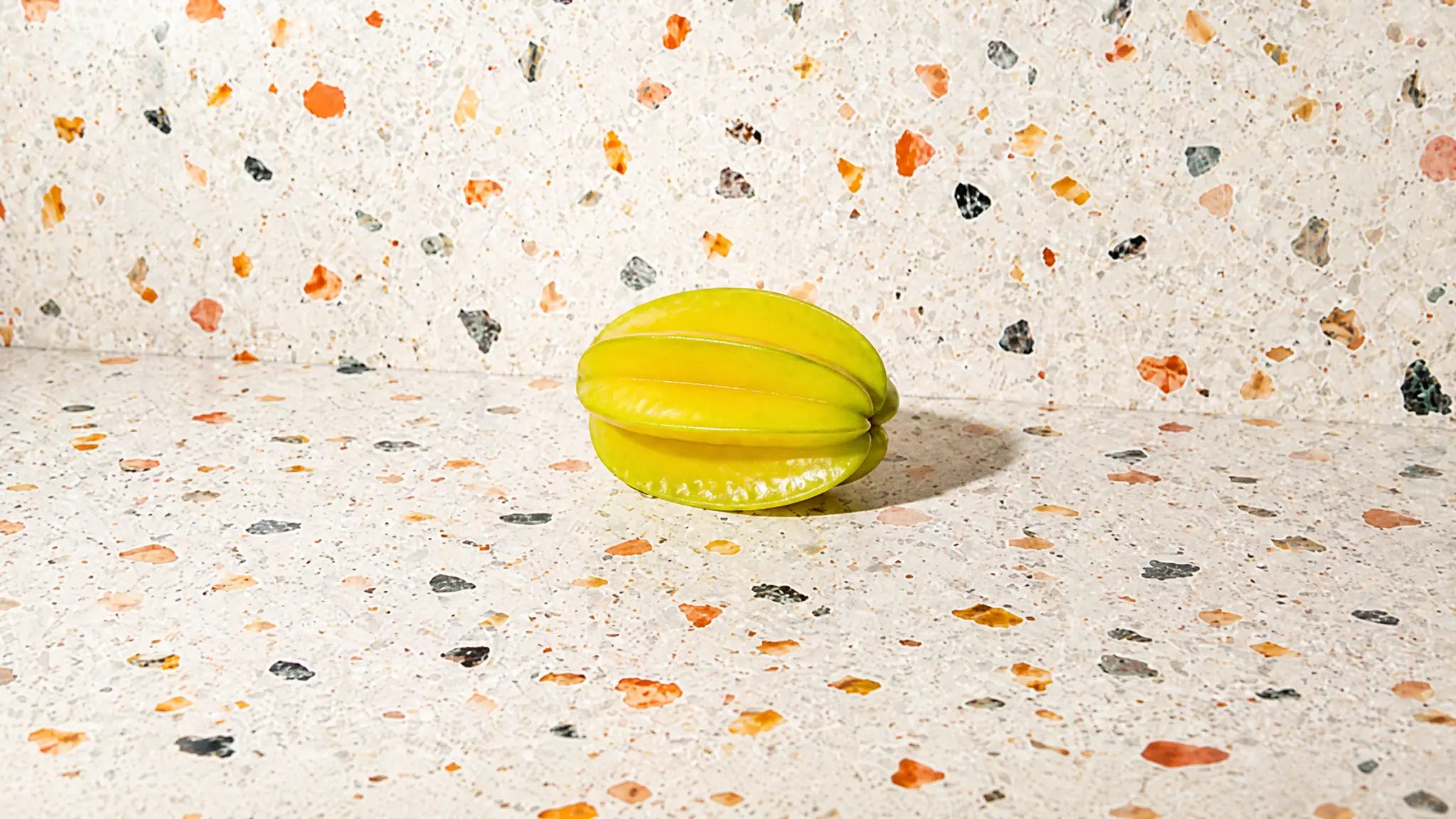
Star Fruit (Carambola)
Fruit
Last updated July 5, 2026. The Tummi Food Team maintains this Can I Feed This safety guide guide. Supporting links appear in Sources when available.



Clinically reviewed by Andria Procopio and Arefa Mohamed
Direct answer
Can babies eat Star Fruit (Carambola)?
Star fruit should not be offered to a baby with kidney disease. For a baby without kidney disease, ask a clinician before introducing it because star fruit has been linked to kidney and neurological toxicity; if they agree, wait until the baby is developmentally ready for solids, usually around 6 months, and serve it soft, seed-free, and in a developmentally appropriate form.
- Serve Age6+months
Most babies start solids around 6 months once they show readiness signs. Match the texture and serving size to your baby's skills.
- No Allergens
Star Fruit (Carambola) is not flagged as one of the major allergens tracked in this database. Still watch your baby closely when serving any new food.
- Choking Risk123453
Some choking risk. Use the prep section to change the size, shape, or texture before serving.
This guide is for everyday food prep questions. Ask your pediatrician about medical concerns, feeding delays, allergy plans, or serious reactions.
How Do You Serve Star Fruit (Carambola)?
How to serve Star Fruit (Carambola) to babies 6 months and older
- 1Cut fruit crosswise into thick star slices (about 1–2 cm) so each piece keeps its star shape and is easy for little hands to grasp.
- 2Remove all seeds and decide about the skin: if the raw skin is firm, peel it; if soft and smooth, you can leave it on. Steam until very soft if you choose to cook it—alternative methods: simmer or roast briefly.
- 3For firmer raw fruit, peel and cook until very soft, then mash slightly or offer thick, soft star sections for baby-led self-feeding.
- 4Always stay within arm’s reach and supervise during meals, introduce the fruit alone at first and watch for any allergic reactions or unusual symptoms.
How to serve Star Fruit (Carambola) to babies 9 months and older
- 1Remove the skin and seeds, then cut ripe fruit into thin star-shaped slices so pieces are easy to hold and swallow.
- 2For a softer texture, peel and de-seed pieces and cook until very soft, then mash or mix into yogurt, porridge, or purees.
- 3Offer small, thin pieces that dissolve easily and test the texture with your finger before serving.
- 4Always supervise meals and keep the child sitting upright; discard any sticky, stringy, or hard pieces.
How to serve Star Fruit (Carambola) to babies 18 months and older
- 1Choose ripe, firm fruit with minimal brown spots and wash thoroughly under running water before preparing.
- 2Remove all seeds and slice the star fruit thinly or cut across the width into flat, bite-sized pieces so they lie flat in the mouth.
- 3If the skin appears waxy or tough, peel it; otherwise leaving the skin on adds texture and nutrients.
- 4For a softer option, cook until tender and serve chopped or mashed mixed into yogurt, porridge, or purees.
- 5Always watch while your child eats and offer small, flat pieces. Keep each piece small and remove seeds to reduce choking risk.
Is Star Fruit (Carambola) a Common Allergen?
Star fruit (carambola) is not a common major food allergen like peanuts, tree nuts, dairy, eggs, soy, fish, shellfish, sesame, or gluten, but it can cause allergic-type reactions in sensitized people. More importantly, it contains caramboxin and high oxalate levels that can produce severe neurotoxic and kidney-related effects in people with impaired renal function—those with kidney disease should avoid it entirely. If introducing to a child with known fruit allergies or prior reactions, go slowly, watch for hives, swelling, vomiting, or breathing difficulty, and seek emergency care for severe symptoms. For most healthy children without allergies or kidney problems, small amounts are generally safe, but check with your pediatrician if you have concerns.
Is Star Fruit (Carambola) a Choking Hazard?
Moderate Choking Risk
Star fruit can be a choking risk because it’s often firm and slippery—especially when underripe—making pieces harder for babies to manage. Always supervise baby closely during meals and stay within an arm’s reach so you can intervene quickly if needed. Caregivers should learn basic choking first aid and rescue maneuvers before introducing new foods.
Have More Questions?
Yes, you can store leftover star fruit slices for your baby in a clean, covered container in the refrigerator. Discard pieces that are bruised, damaged, rotten, or have been in contact with the baby’s mouth, and do not rely on a fixed one-week limit to judge safety.
Yes, you can freeze freshly prepared star fruit puree for your baby in a clean, freezer-safe container. Freeze small amounts for later use, but follow the container manufacturer’s instructions rather than treating three months as an established safety limit for homemade baby puree.
You may choose organic or conventional star fruit for your baby, but an organic label does not mean the fruit is guaranteed to be free of pesticide residues. Whichever you choose, select undamaged fruit and wash it thoroughly under running water before cutting or peeling it.
Yes, you can mix star fruit with other foods for your baby after each ingredient has been prepared in a developmentally appropriate form. Mixing a new food with a familiar food can help some children accept it, but this does not remove the kidney-related precautions that apply specifically to star fruit.
There is no single typical portion of star fruit for every baby. If a clinician has agreed that it is appropriate for your baby, begin with a small amount in a developmentally appropriate texture and let the baby’s hunger and fullness cues guide how much they eat.
Save Star Fruit (Carambola) to your food log
Track foods, reactions, and prep notes in Tummi when you want to keep your baby's feeding history in one place.
Sources
- Nutritional and medicinal properties of Star fruit (Averrhoa carambola): A review doi.org
- Dietary oxalate and kidney stone formation doi.org
- Nutritional, Medicinal and Toxicological Attributes of Star-Fruits (Averrhoa carambola L.): A Review doi.org
- Mechanisms of star fruit (Averrhoa carambola) toxicity: A mini-review doi.org
- Star fruit: simultaneous neurotoxic and nephrotoxic effects in people with previously normal renal function doi.org
- Inhibition of human liver cytochrome P450 by star fruit juice doi.org
- Potent inhibition by star fruit of human cytochrome P450 3A (CYP3A) activity doi.org
- A case of oral allergy syndrome due to star fruit sensitized from atopic hands doi.org
What Other Fruit Can Babies Eat?
See all →



Source-Linked Guidance
See the evidence behind the guide.
Food guides show direct links to public-health guidance and research when supporting references are available. Source inclusion does not imply endorsement.
 Centers for Disease Control and Prevention
Developmental milestones, nutrition guidelines, and allergen introduction timelines.
 American Academy of Pediatrics
Evidence-based feeding recommendations from the leading pediatric authority.
 National Institutes of Health
Peer-reviewed research on infant nutrition, allergies, and food safety.